The AI that knows you’re about to get sick: A 2026 reality check
“Your smartwatch won’t save you. Not yet. But it’s already whispering clues your doctor can’t hear. And soon, you may have to decide: do you really want to know what your body is hiding?”.
Introduction: The clock inside your body
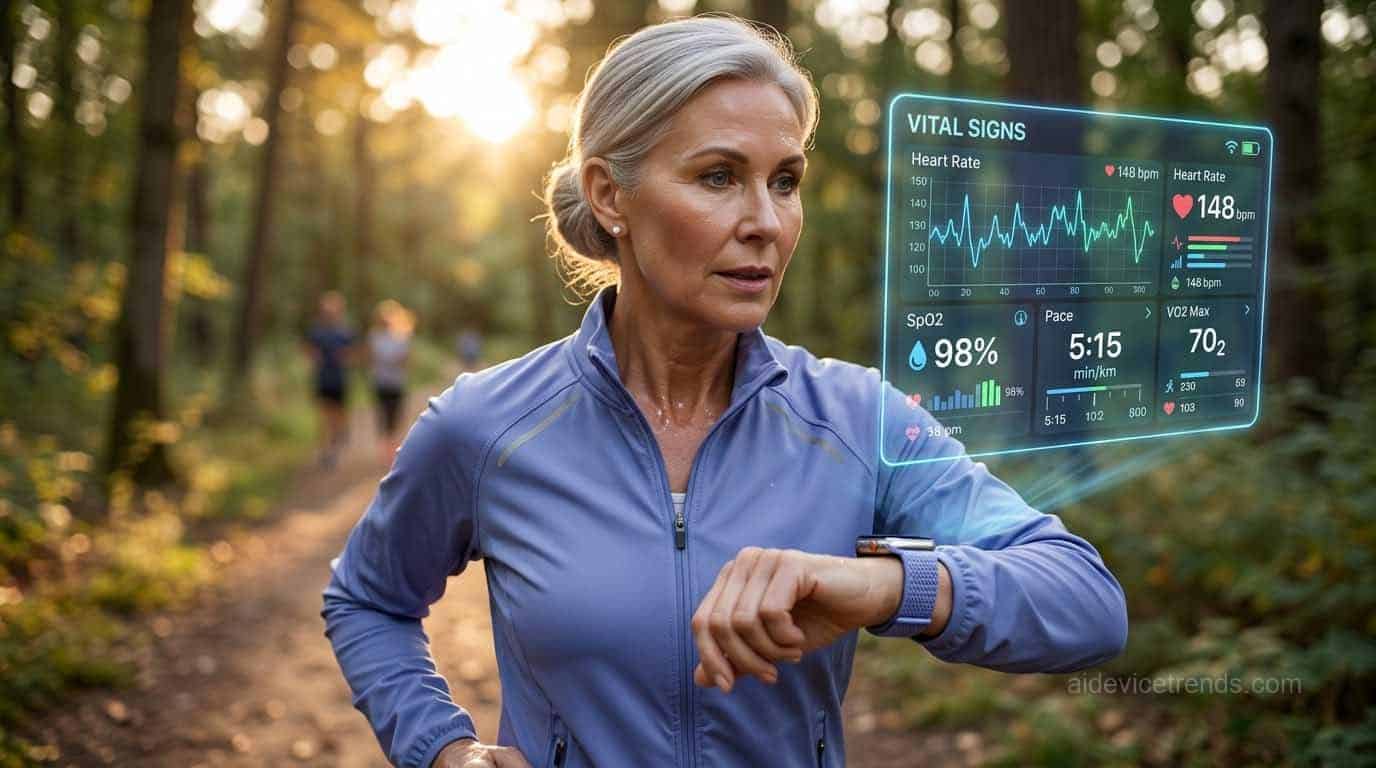
I remember the exact moment I stopped looking at my smartwatch as a fitness tracker and started seeing it as something else. I was fine. Or so I thought. A notification popped up: “Resting heart rate elevated over past 7 days.”
I shrugged. Stress, maybe. Bad sleep. Then I remembered the story of a 76-year-old visiting scholar at Stanford. He collapsed and died moments after a workout. When researchers later analyzed his smartwatch data, they found a sinister, months-long trend. His heart rate variability had been dropping. His resting heart rate had been climbing. The warning signs were there—etched in his data four full months before his heart stopped「15†L4-L13」.
No one had been watching. No system had alerted him.
Today, that is beginning to change. AI is learning to read the hidden dashboard our bodies are always broadcasting. It can spot diseases years before a single symptom appears. But this isn’t just a story about technology. It’s a story about us—about whether we’re ready to hear what our bodies have been trying to say.
The body never lies. It just whispers. AI is finally giving us ears to hear. But once we hear, we can’t unhear.
1. The numbers are staggering (and so is the speed)
The healthcare predictive analytics market is exploding. It will grow from 25.73billionin2025to32.95 billion in 2026—a compound annual growth rate of 28.1%. By 2030, it’s expected to reach nearly $90 billion. Why? Because chronic diseases already account for 41 million deaths annually—74% of all global deaths. And most of these could be delayed, or even prevented, with earlier detection.
AI isn’t just a tool anymore. It’s becoming a second set of eyes—one that never blinks.
We spend trillions on treatment. We spend almost nothing on listening. The machine is finally teaching us to listen before the sirens go off.
2. The quiet revolution inside a scan
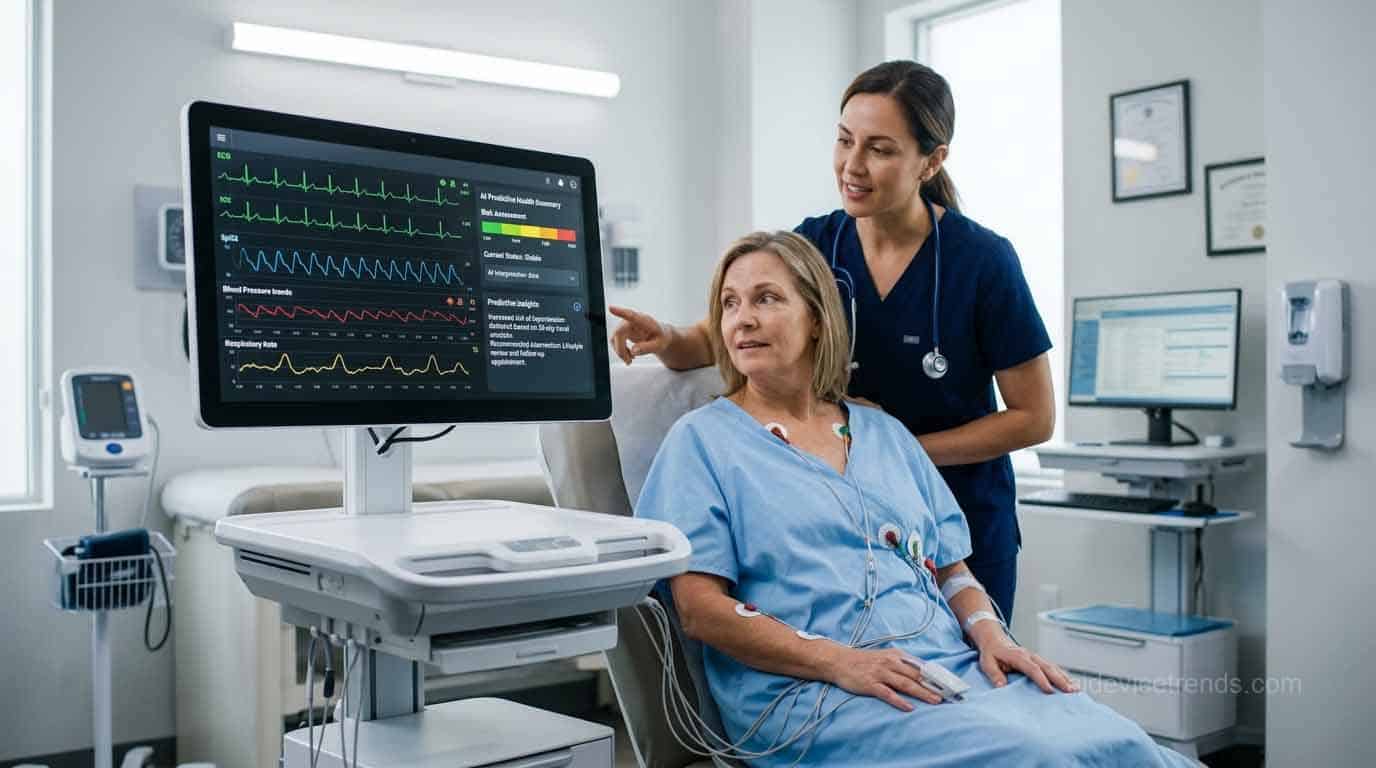
Researchers funded by the National Institutes of Health (NIH) have developed an AI model called Merlin. It analyzes routine abdominal CT scans—the kind millions of people already get every year—and spots patterns the human eye simply cannot see. In tests, Merlin correctly predicted which scan was more likely to be linked to a specific diagnosis more than 81% of the time, outperforming other AI systems designed specifically for that task.
But here’s the breathtaking part: when researchers looked at CT scans from people who appeared healthy, Merlin could identify those more likely to develop diabetes, osteoporosis, or heart disease within the next five years. And it did so with about 75% accuracy. The AI was seeing subtle warning signs—biomarkers invisible to the human eye—years before any doctor would have noticed.
3. The wearable that knows before you do
A military-funded project called TemPredict, developed by teams at UCSF and UCSD, uses wearable sensor data to identify early signs of illness before they degrade performance. It has already achieved over 100 research milestones and influenced the entire wearable technology industry.
The most exciting work is happening at Oxford. Dr. Xiao Gu is developing a “Digital Triage Nurse” —an AI that learns each person’s individual health signature from their wearable data. Like ChatGPT learns language patterns, this model learns your body’s unique rhythms. When something goes off, it flags early signs of clinical decline before a crisis sends you to the hospital.
Your watch tracks your steps. The Digital Triage Nurse will track your life. The question isn’t whether it works. The question is: will you trust it?
4. The silence in the waiting room
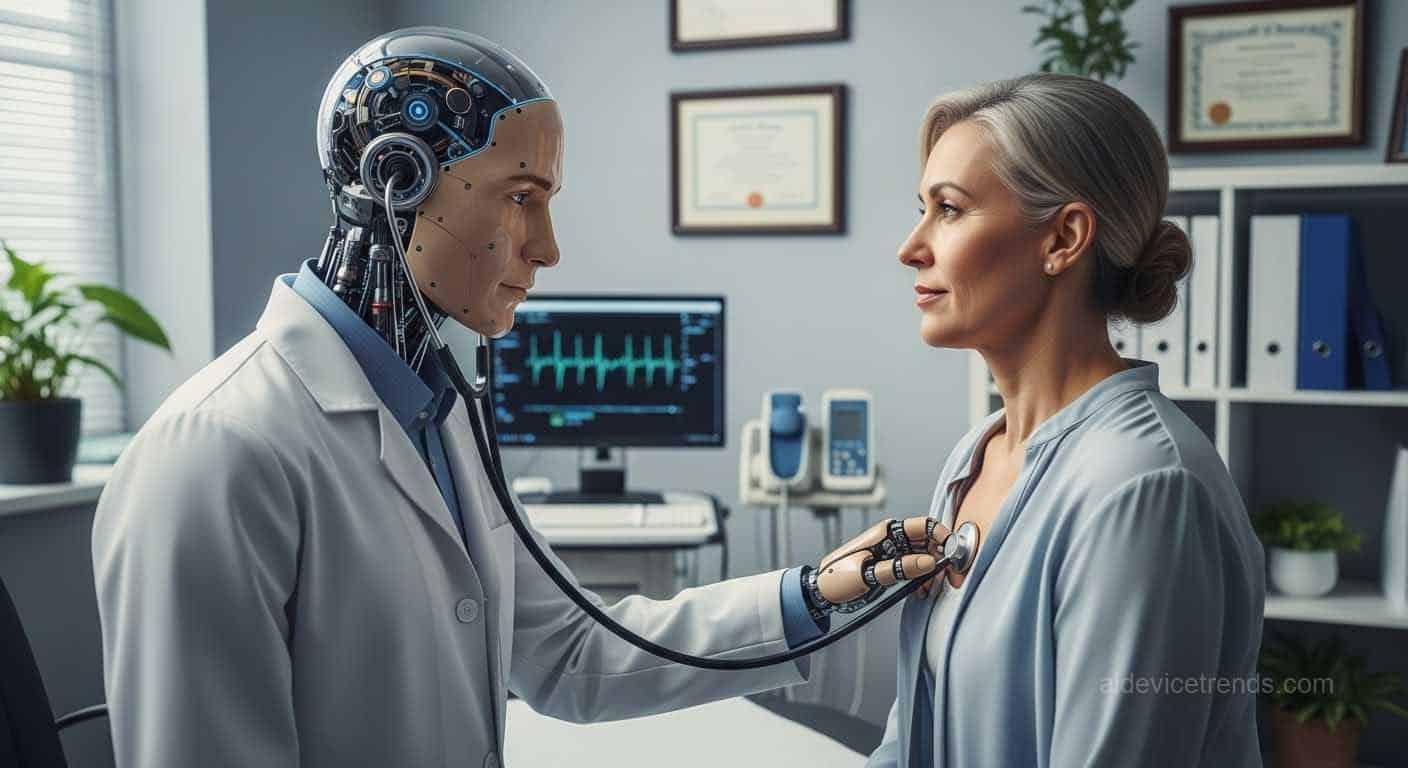
The American Medical Association reports that over 80% of physicians now use AI in their practices—double the share from 2023. More than three-quarters believe AI improves their ability to care for patients. Meanwhile, the share of U.S. adults using AI chatbots for health questions doubled in a single year—from 16% to 32%.
But here’s where the data meets my personal reality. A 2025 JAMA study found that for complex diagnostic cases, AI correctly identified more critical red flags than physicians. In some clinical studies, AI achieved 90% top-1 accuracy in case studies where physicians scored less than 16%. Another study showed AI could surpass both residents (94%) and attending physicians (87%) in diagnostic accuracy. At the same time, research shows that physician behavior can be influenced by financial incentives in fee-for-service models, where providers are paid per procedure rather than for outcomes. This can lead to over-diagnosis and over-treatment.
A personal footnote: Why I trust algorithms more than white coats
I want to be honest with you. I trust AI for medical diagnosis more than I trust most human doctors. There, I said it.
It sounds radical. But the data backs me up. The machine is simply better at clinical reasoning. It doesn’t get tired. It doesn’t have biases. And most importantly: it has no financial incentive to find something wrong.
I stopped going to doctors years ago. Not out of fear. Out of disappointment. Too many times, I felt like a customer, not a patient. A walking wallet with a pulse.
My medicine is my food. My food is my medicine. I live by Hippocrates’ ancient wisdom—not because it’s old, but because it’s true. A 2025 review in JACC: CardioOncology confirms that multiple guidelines now recommend a whole-food plant-centered diet for the primary and secondary prevention of CVD and cancer. The 2026 American Heart Association dietary guidance emphasizes vegetables, fruits, whole grains, and reduced intake of highly processed foods. Meta-analyses of controlled trials show that plant-based and Mediterranean dietary patterns reduce C-reactive protein (CRP), a key marker of systemic inflammation—and that vegetarian diets are significantly associated with lower CRP levels.
My second medicine is fasting. A 2026 narrative review in PubMed shows that fasting modulates immune and inflammatory tone, reshapes the gut microbiome, and may benefit autoimmune conditions. In humans, intermittent fasting improves body composition, insulin sensitivity, and lipid profiles. The evidence is so clear that the authors conclude fasting can be viewed as a low‑cost, multidimensional “biopsychospiritual” health intervention. Combined with regular exercise—proven cost‑effective for managing fatigue and long‑term conditions—my own experience of more energy, better sleep, and less weight matches the data perfectly.
Here is what haunts me. The same AI that is disrupting diagnostics is also the only force capable of revealing this uncomfortable truth. By exposing how good machine reasoning can be when stripped of financial motive, it shines a light on the cracks in the human system.
My philosophy is not a rejection of medicine. It is a rejection of a broken system. If I had a genuine emergency, I would go to a hospital. But for the daily maintenance of health, for the quiet work of preventing sickness before it starts, I trust my body, my food, my meditation, and yes—the machine that has no hidden agenda.
We wanted control over our health. AI gave it to us. Now we have to learn how to hold it without crushing it.
The gift we haven’t learned to open
We are standing at a strange threshold. For the first time in human history, we have tools that can see inside our future bodies. They are imperfect. They are uncertain. But they are real.
The AI that knows you’re about to get sick isn’t science fiction. It’s being built right now, in labs across the world, using data from millions of patients. It’s reading CT scans. It’s watching your wrist. It’s whispering warnings that no human doctor could ever hear.
The question isn’t whether this technology will arrive. It already has. The question is whether we’re ready for it. Whether we can handle the knowledge without being paralyzed by it. Whether we can use the machine to live longer, not just to worry longer.
What about you? Have you also found yourself trusting AI over a human professional? Have you experienced the economic machinery of modern medicine firsthand? I really want to know. Leave your honest story in the comments.
“Your smartwatch won’t save you. Not yet. But it’s already whispering clues your doctor can’t hear. And soon, you may have to decide: do you really want to know what your body is hiding?”.
Introduction: The clock inside your body
I remember the exact moment I stopped looking at my smartwatch as a fitness tracker and started seeing it as something else. I was fine. Or so I thought. A notification popped up: “Resting heart rate elevated over past 7 days.”
I shrugged. Stress, maybe. Bad sleep. Then I remembered the story of a 76-year-old visiting scholar at Stanford. He collapsed and died moments after a workout. When researchers later analyzed his smartwatch data, they found a sinister, months-long trend. His heart rate variability had been dropping. His resting heart rate had been climbing. The warning signs were there—etched in his data four full months before his heart stopped「15†L4-L13」.
No one had been watching. No system had alerted him.
Today, that is beginning to change. AI is learning to read the hidden dashboard our bodies are always broadcasting. It can spot diseases years before a single symptom appears. But this isn’t just a story about technology. It’s a story about us—about whether we’re ready to hear what our bodies have been trying to say.
The body never lies. It just whispers. AI is finally giving us ears to hear. But once we hear, we can’t unhear.
1. The numbers are staggering (and so is the speed)
The healthcare predictive analytics market is exploding. It will grow from 25.73billionin2025to32.95 billion in 2026—a compound annual growth rate of 28.1%. By 2030, it’s expected to reach nearly $90 billion. Why? Because chronic diseases already account for 41 million deaths annually—74% of all global deaths. And most of these could be delayed, or even prevented, with earlier detection.
AI isn’t just a tool anymore. It’s becoming a second set of eyes—one that never blinks.
We spend trillions on treatment. We spend almost nothing on listening. The machine is finally teaching us to listen before the sirens go off.
2. The quiet revolution inside a scan
Researchers funded by the National Institutes of Health (NIH) have developed an AI model called Merlin. It analyzes routine abdominal CT scans—the kind millions of people already get every year—and spots patterns the human eye simply cannot see. In tests, Merlin correctly predicted which scan was more likely to be linked to a specific diagnosis more than 81% of the time, outperforming other AI systems designed specifically for that task.
But here’s the breathtaking part: when researchers looked at CT scans from people who appeared healthy, Merlin could identify those more likely to develop diabetes, osteoporosis, or heart disease within the next five years. And it did so with about 75% accuracy. The AI was seeing subtle warning signs—biomarkers invisible to the human eye—years before any doctor would have noticed.
3. The wearable that knows before you do
A military-funded project called TemPredict, developed by teams at UCSF and UCSD, uses wearable sensor data to identify early signs of illness before they degrade performance. It has already achieved over 100 research milestones and influenced the entire wearable technology industry.
The most exciting work is happening at Oxford. Dr. Xiao Gu is developing a “Digital Triage Nurse” —an AI that learns each person’s individual health signature from their wearable data. Like ChatGPT learns language patterns, this model learns your body’s unique rhythms. When something goes off, it flags early signs of clinical decline before a crisis sends you to the hospital.
Your watch tracks your steps. The Digital Triage Nurse will track your life. The question isn’t whether it works. The question is: will you trust it?
4. The silence in the waiting room
The American Medical Association reports that over 80% of physicians now use AI in their practices—double the share from 2023. More than three-quarters believe AI improves their ability to care for patients. Meanwhile, the share of U.S. adults using AI chatbots for health questions doubled in a single year—from 16% to 32%.
But here’s where the data meets my personal reality. A 2025 JAMA study found that for complex diagnostic cases, AI correctly identified more critical red flags than physicians. In some clinical studies, AI achieved 90% top-1 accuracy in case studies where physicians scored less than 16%. Another study showed AI could surpass both residents (94%) and attending physicians (87%) in diagnostic accuracy. At the same time, research shows that physician behavior can be influenced by financial incentives in fee-for-service models, where providers are paid per procedure rather than for outcomes. This can lead to over-diagnosis and over-treatment.
A personal footnote: Why I trust algorithms more than white coats
I want to be honest with you. I trust AI for medical diagnosis more than I trust most human doctors. There, I said it.
It sounds radical. But the data backs me up. The machine is simply better at clinical reasoning. It doesn’t get tired. It doesn’t have biases. And most importantly: it has no financial incentive to find something wrong.
I stopped going to doctors years ago. Not out of fear. Out of disappointment. Too many times, I felt like a customer, not a patient. A walking wallet with a pulse.
My medicine is my food. My food is my medicine. I live by Hippocrates’ ancient wisdom—not because it’s old, but because it’s true. A 2025 review in JACC: CardioOncology confirms that multiple guidelines now recommend a whole-food plant-centered diet for the primary and secondary prevention of CVD and cancer. The 2026 American Heart Association dietary guidance emphasizes vegetables, fruits, whole grains, and reduced intake of highly processed foods. Meta-analyses of controlled trials show that plant-based and Mediterranean dietary patterns reduce C-reactive protein (CRP), a key marker of systemic inflammation—and that vegetarian diets are significantly associated with lower CRP levels.
My second medicine is fasting. A 2026 narrative review in PubMed shows that fasting modulates immune and inflammatory tone, reshapes the gut microbiome, and may benefit autoimmune conditions. In humans, intermittent fasting improves body composition, insulin sensitivity, and lipid profiles. The evidence is so clear that the authors conclude fasting can be viewed as a low‑cost, multidimensional “biopsychospiritual” health intervention. Combined with regular exercise—proven cost‑effective for managing fatigue and long‑term conditions—my own experience of more energy, better sleep, and less weight matches the data perfectly.
Here is what haunts me. The same AI that is disrupting diagnostics is also the only force capable of revealing this uncomfortable truth. By exposing how good machine reasoning can be when stripped of financial motive, it shines a light on the cracks in the human system.
My philosophy is not a rejection of medicine. It is a rejection of a broken system. If I had a genuine emergency, I would go to a hospital. But for the daily maintenance of health, for the quiet work of preventing sickness before it starts, I trust my body, my food, my meditation, and yes—the machine that has no hidden agenda.
We wanted control over our health. AI gave it to us. Now we have to learn how to hold it without crushing it.
The gift we haven’t learned to open
We are standing at a strange threshold. For the first time in human history, we have tools that can see inside our future bodies. They are imperfect. They are uncertain. But they are real.
The AI that knows you’re about to get sick isn’t science fiction. It’s being built right now, in labs across the world, using data from millions of patients. It’s reading CT scans. It’s watching your wrist. It’s whispering warnings that no human doctor could ever hear.
The question isn’t whether this technology will arrive. It already has. The question is whether we’re ready for it. Whether we can handle the knowledge without being paralyzed by it. Whether we can use the machine to live longer, not just to worry longer.
What about you? Have you also found yourself trusting AI over a human professional? Have you experienced the economic machinery of modern medicine firsthand? I really want to know. Leave your honest story in the comments.
ME + AI = UNLIMITED PROJECTS
weekly popular
you might also like

From layoff to $300k ARR in 12 weeks: The dawn of the AI solopreneur
"Nine months ago, he was laid off. The reason? AI. Today, he runs a company projected to hit $5 million in revenue this year — with just two partners and an army of 12 [...]

FBI probes 12 missing scientists; A 2026 mystery that could redefine reality – Part 2: The time travel theory
"They have been watching us for generations. Their ships are silent. Their bodies are strange. But if Greys are truly time travelers from a dying future, their mission is not conquest — it is [...]
FBI probes 12 missing scientists; a 2026 mystery that could redefine reality – Part 1: The investigation
"The FBI is investigating. Congress is demanding answers. Twenty scientists connected to America's and China's most sensitive nuclear, hypersonic, AI, and space programs have died or vanished. The only theory that fits the facts [...]
The ‘ChatGPT moment’ for robots is here: Why 2026 is the year physical AI gets real
"The AI that could write your emails was only the first act. Now comes the sequel: machines that read pressure gauges, and load factory trucks. Robots are finally learning what the world feels like". [...]