
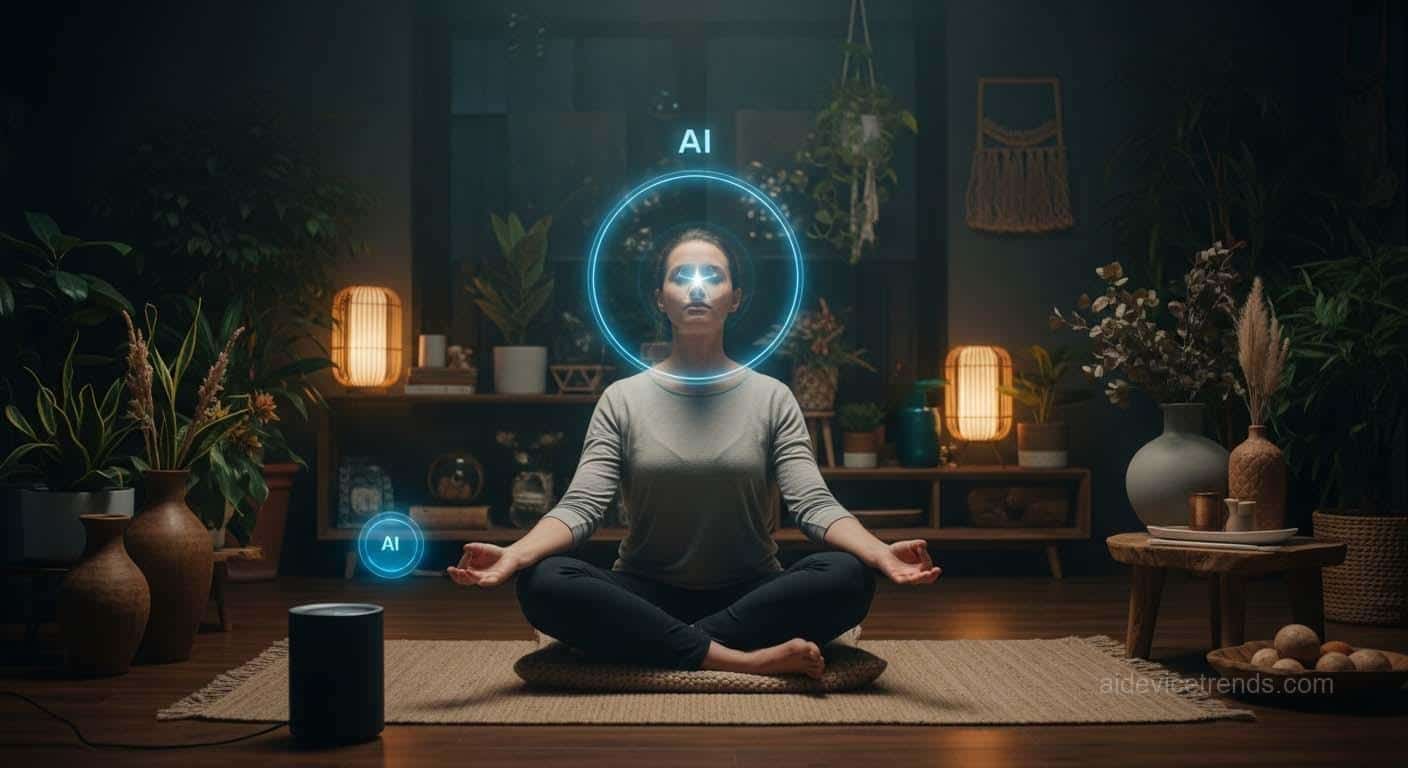
Can AI help us meditate? the new frontier of inner discovery
Introduction: The quiet in the machine
I have a confession to make. I’m not good at meditating. My mind is a browser with a hundred tabs open. Every time I try to sit still, the silence feels less like peace and more like an interrogation. I’ve downloaded apps before. But the generic, “one-size-fits-all” voice telling me to imagine a calm beach never quite worked. It wasn’t my calm.
Then, recently, I tried something different. An app didn’t just play a recording. It asked me how I was feeling. I typed: “Stressed. Scattered. Like a browser with too many tabs.” Instead of a beach, it guided me through a quick body scan to unload the tabs, one by one. It was specific. It was personal. It was surprisingly effective.
For the first time, I wondered if AI could help us discover, not escape, our inner world.

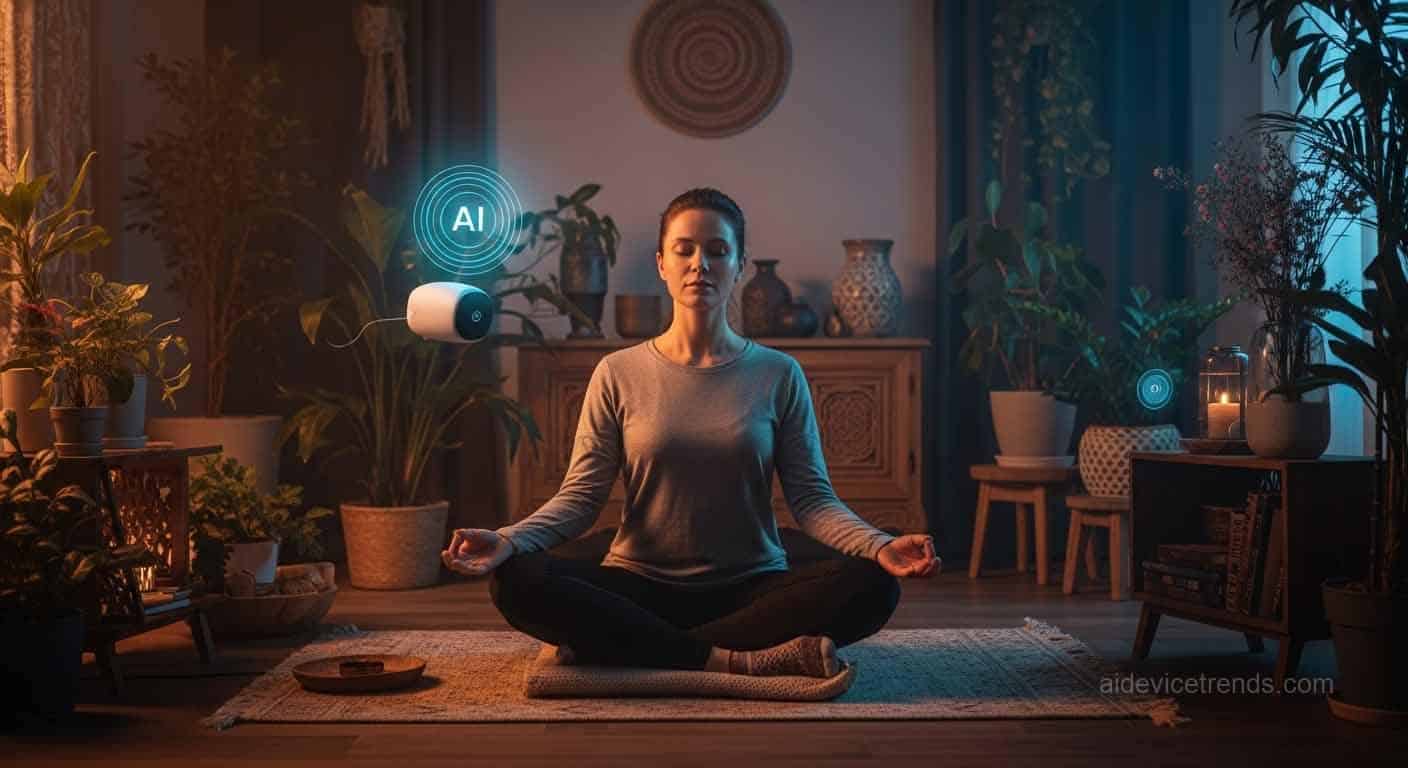
1. The science of silence: why it works (and why we quit)
Meditation is having a moment. The global meditation software market is projected to hit $5 billion in 2026, growing at over 11% annually. But the real story isn’t about the market size; it’s about engagement. A staggering 80% of people abandon meditation apps within the first month. The practice is ancient and proven, yet the habit is fragile.
The problem isn’t the technique. The problem is the “one-size-fits-all” approach. What works for a stressed CEO doesn’t work for an anxious college student. What calms a new parent might bore an insomniac.
We don’t just need silence. We need the right kind of silence.
AI is stepping in to fill this gap. A systematic review published in early 2026 found that AI-driven mind-body interventions significantly improved mental and physiological health outcomes, including cortisol levels, anxiety, and depression scores. It’s not magic. It’s personalization at scale.
2. The guide that knows you: AI as a spiritual librarian
Imagine walking into a vast library of 300,000 books on mindfulness, but you have no idea which one to read. You would feel lost. This is the paradox of abundance.
Insight Timer, the world’s largest meditation platform with over 32 million members, is solving this with AI. Its new feature uses a proprietary algorithm to act as a “digital librarian.” You set a daily intention—“to be more patient with my kids”—and the AI suggests specific, supportive practices from its library of 300,000 free resources.
A librarian doesn’t tell you what to think. It helps you find what you’re already looking for.
Similarly, a study from March 2026 introduced “MindfulAgents,” a multi-agent system powered by large language models. It generates guided meditation scripts in real-time, based on an expert framework, and personalizes the experience for each user. In a four-week deployment study, participants showed a notable increase in long-term engagement and mindfulness. The AI didn’t replace the teacher; it became the bridge to the practice.
3. The companion who listens: when your phone becomes a confidant
There is a difference between hearing a voice and feeling heard. The most intriguing AI apps in 2026 are blurring this line.
-
Nadeen bills itself as the world’s first AI meditation app that talks to you, understands you, and creates meditations designed just for how you feel, in real time. You speak to it like a coach or a friend. It listens, responds, and guides you toward calm.
-
Wysa is an AI-powered “happiness buddy” used by millions. You chat with a cute penguin avatar that uses evidence-based techniques from CBT and DBT to help you navigate stress, low mood, and anxiety. It feels less like a clinical tool and more like a supportive text from a friend.
The deep irony isn’t lost on me: in our most disconnected moments, we are turning to machines to feel heard. Perhaps this is a stepping stone. The AI companion offers a judgment-free space to articulate our feelings, and in doing so, it helps us understand them ourselves.
4. The science of you: data-driven mindfulness
Traditional meditation is a leap of faith. AI-powered meditation is more like a guided experiment. It uses data—your data—to refine the process.
A 2026 study published in Scientific Reports tested an AI-driven system that combined physical exercise and mindfulness practices with 328 university students. The results were striking. The AI-personalized group showed a 36.7% stress reduction and a 10.28% GPA increase.
Your breath is a data stream. Your heart rate is a signal. AI can read these signals and gently guide you back to center.
Furthermore, the systematic review highlighted that AI-based interventions outperformed traditional approaches in personalization, engagement, and adherence rates. It’s not that the technology is wiser; it’s that it has the patience and processing power to track patterns we would otherwise miss.
5. The question we must ask: what does the machine not know?
For all its promise, this new frontier invites a humble question: If a machine can teach us to meditate, what is it that only a human can teach?
AI can guide your breath, but it cannot witness your life. It can suggest a mantra, but it cannot feel the weight of your grief. It can track your stress levels, but it cannot sit with you in silence when words are not enough.
A 2026 review also pointed out concerns about data privacy, algorithmic bias, and the variability of AI effectiveness depending on training datasets. There is a risk of bias in AI-generated recommendations. We must be careful not to outsource our entire inner world to a system that is still learning how to be human.
The fear is not that AI will replace the human teacher. The fear is that we will forget what the human teacher offers that AI cannot: presence, intuition, and the unspoken transmission of a shared human experience.
6. A tool, not a guru
I am still not a great meditator. My mind still wanders. But now, when it does, I have a pocket companion that doesn’t judge. It just offers another path back. The silence isn’t empty anymore. It’s filled with the quiet hum of a machine trying to help me find my own quiet.
Perhaps the real gift of AI meditation is not that it makes us calmer, but that it makes us more curious. It turns a passive practice into an active exploration. “How do you feel today?” it asks. And in answering, we learn to listen to the one voice that truly matters: our own.
Finding ourselves in the machine
The path inward has always been a solitary one. But for the first time, we have companions who never tire of walking it with us. They will not judge our wandering minds or our broken habits. They will simply reflect back our own data, our own patterns, our own potential.
AI can help us find the door to our inner world. But only we can decide to walk through it.
What about you? Have you ever used an AI app to meditate or manage stress? Do you think a machine can help us find our inner peace, or is there something irreplaceable about the human touch? I’d love to hear your thoughts in the comments.
Reference links
- Meditation Software Market Report 2026 – Research and Markets
- Insight Timer Launches New Year’s Resolution and Intention-Setting Features with AI Recommendation Engine
- MindfulAgents: Personalizing Mindfulness Meditation via an Expert-Aligned Multi-Agent System – arXiv
- Nadeen: AI Meditation & Calm App – App Store
- Wysa: Mental Wellbeing AI – App Store
- Optimization of academic performance and mental health in college students through an AI-driven personalized physical exercise and mindfulness intervention system
- Fusion of Artificial Intelligence and Mind-Body Medicine for Holistic Health: A Systematic Review – PubMed
- Why You Can’t Meditate Without Your App (And How to Fix It) – StillMind
Introduction: The quiet in the machine
I have a confession to make. I’m not good at meditating. My mind is a browser with a hundred tabs open. Every time I try to sit still, the silence feels less like peace and more like an interrogation. I’ve downloaded apps before. But the generic, “one-size-fits-all” voice telling me to imagine a calm beach never quite worked. It wasn’t my calm.
Then, recently, I tried something different. An app didn’t just play a recording. It asked me how I was feeling. I typed: “Stressed. Scattered. Like a browser with too many tabs.” Instead of a beach, it guided me through a quick body scan to unload the tabs, one by one. It was specific. It was personal. It was surprisingly effective.
For the first time, I wondered if AI could help us discover, not escape, our inner world.
1. The science of silence: why it works (and why we quit)
Meditation is having a moment. The global meditation software market is projected to hit $5 billion in 2026, growing at over 11% annually. But the real story isn’t about the market size; it’s about engagement. A staggering 80% of people abandon meditation apps within the first month. The practice is ancient and proven, yet the habit is fragile.
The problem isn’t the technique. The problem is the “one-size-fits-all” approach. What works for a stressed CEO doesn’t work for an anxious college student. What calms a new parent might bore an insomniac.
We don’t just need silence. We need the right kind of silence.
AI is stepping in to fill this gap. A systematic review published in early 2026 found that AI-driven mind-body interventions significantly improved mental and physiological health outcomes, including cortisol levels, anxiety, and depression scores. It’s not magic. It’s personalization at scale.
2. The guide that knows you: AI as a spiritual librarian
Imagine walking into a vast library of 300,000 books on mindfulness, but you have no idea which one to read. You would feel lost. This is the paradox of abundance.
Insight Timer, the world’s largest meditation platform with over 32 million members, is solving this with AI. Its new feature uses a proprietary algorithm to act as a “digital librarian.” You set a daily intention—“to be more patient with my kids”—and the AI suggests specific, supportive practices from its library of 300,000 free resources.
A librarian doesn’t tell you what to think. It helps you find what you’re already looking for.
Similarly, a study from March 2026 introduced “MindfulAgents,” a multi-agent system powered by large language models. It generates guided meditation scripts in real-time, based on an expert framework, and personalizes the experience for each user. In a four-week deployment study, participants showed a notable increase in long-term engagement and mindfulness. The AI didn’t replace the teacher; it became the bridge to the practice.
3. The companion who listens: when your phone becomes a confidant
There is a difference between hearing a voice and feeling heard. The most intriguing AI apps in 2026 are blurring this line.
-
Nadeen bills itself as the world’s first AI meditation app that talks to you, understands you, and creates meditations designed just for how you feel, in real time. You speak to it like a coach or a friend. It listens, responds, and guides you toward calm.
-
Wysa is an AI-powered “happiness buddy” used by millions. You chat with a cute penguin avatar that uses evidence-based techniques from CBT and DBT to help you navigate stress, low mood, and anxiety. It feels less like a clinical tool and more like a supportive text from a friend.
The deep irony isn’t lost on me: in our most disconnected moments, we are turning to machines to feel heard. Perhaps this is a stepping stone. The AI companion offers a judgment-free space to articulate our feelings, and in doing so, it helps us understand them ourselves.
4. The science of you: data-driven mindfulness
Traditional meditation is a leap of faith. AI-powered meditation is more like a guided experiment. It uses data—your data—to refine the process.
A 2026 study published in Scientific Reports tested an AI-driven system that combined physical exercise and mindfulness practices with 328 university students. The results were striking. The AI-personalized group showed a 36.7% stress reduction and a 10.28% GPA increase.
Your breath is a data stream. Your heart rate is a signal. AI can read these signals and gently guide you back to center.
Furthermore, the systematic review highlighted that AI-based interventions outperformed traditional approaches in personalization, engagement, and adherence rates. It’s not that the technology is wiser; it’s that it has the patience and processing power to track patterns we would otherwise miss.
5. The question we must ask: what does the machine not know?
For all its promise, this new frontier invites a humble question: If a machine can teach us to meditate, what is it that only a human can teach?
AI can guide your breath, but it cannot witness your life. It can suggest a mantra, but it cannot feel the weight of your grief. It can track your stress levels, but it cannot sit with you in silence when words are not enough.
A 2026 review also pointed out concerns about data privacy, algorithmic bias, and the variability of AI effectiveness depending on training datasets. There is a risk of bias in AI-generated recommendations. We must be careful not to outsource our entire inner world to a system that is still learning how to be human.
The fear is not that AI will replace the human teacher. The fear is that we will forget what the human teacher offers that AI cannot: presence, intuition, and the unspoken transmission of a shared human experience.
6. A tool, not a guru
I am still not a great meditator. My mind still wanders. But now, when it does, I have a pocket companion that doesn’t judge. It just offers another path back. The silence isn’t empty anymore. It’s filled with the quiet hum of a machine trying to help me find my own quiet.
Perhaps the real gift of AI meditation is not that it makes us calmer, but that it makes us more curious. It turns a passive practice into an active exploration. “How do you feel today?” it asks. And in answering, we learn to listen to the one voice that truly matters: our own.
Finding ourselves in the machine
The path inward has always been a solitary one. But for the first time, we have companions who never tire of walking it with us. They will not judge our wandering minds or our broken habits. They will simply reflect back our own data, our own patterns, our own potential.
AI can help us find the door to our inner world. But only we can decide to walk through it.
What about you? Have you ever used an AI app to meditate or manage stress? Do you think a machine can help us find our inner peace, or is there something irreplaceable about the human touch? I’d love to hear your thoughts in the comments.
Reference links
- Meditation Software Market Report 2026 – Research and Markets
- Insight Timer Launches New Year’s Resolution and Intention-Setting Features with AI Recommendation Engine
- MindfulAgents: Personalizing Mindfulness Meditation via an Expert-Aligned Multi-Agent System – arXiv
- Nadeen: AI Meditation & Calm App – App Store
- Wysa: Mental Wellbeing AI – App Store
- Optimization of academic performance and mental health in college students through an AI-driven personalized physical exercise and mindfulness intervention system
- Fusion of Artificial Intelligence and Mind-Body Medicine for Holistic Health: A Systematic Review – PubMed
- Why You Can’t Meditate Without Your App (And How to Fix It) – StillMind
ME + AI = UNLIMITED PROJECTS
weekly popular
you might also like

From layoff to $300k ARR in 12 weeks: The dawn of the AI solopreneur
"Nine months ago, he was laid off. The reason? AI. Today, he runs a company projected to hit $5 million in revenue this year — with just two partners and an army of 12 [...]

FBI probes 12 missing scientists; A 2026 mystery that could redefine reality – Part 2: The time travel theory
"They have been watching us for generations. Their ships are silent. Their bodies are strange. But if Greys are truly time travelers from a dying future, their mission is not conquest — it is [...]

FBI probes 12 missing scientists; a 2026 mystery that could redefine reality – Part 1: The investigation
"The FBI is investigating. Congress is demanding answers. Twenty scientists connected to America's and China's most sensitive nuclear, hypersonic, AI, and space programs have died or vanished. The only theory that fits the facts [...]

The ‘ChatGPT moment’ for robots is here: Why 2026 is the year physical AI gets real
"The AI that could write your emails was only the first act. Now comes the sequel: machines that read pressure gauges, and load factory trucks. Robots are finally learning what the world feels like". [...]