The nurse who never sleeps: When AI cares for the ones we love
Introduction: The silence of an empty chair
I remember the day my grandmother stopped calling me by my name. She looked at me with the same warm eyes, but there was a flicker of confusion. She was still there, but part of her was already fading. My family and I couldn’t be with her 24 hours a day, seven days a week. Life doesn’t stop. And the guilt of that—the constant worry, the late-night calls to check in—it weighs on you like a stone you can never put down.
But what if there was someone else? Someone who never sleeps, never gets impatient, never looks away? Someone who could be there in the silent hours of the night when a fall happens, or in the lonely afternoons when the only voice in the house is the one from the television?
That someone isn’t human. And that’s exactly the point.
1. The little robot that fills a big empty house
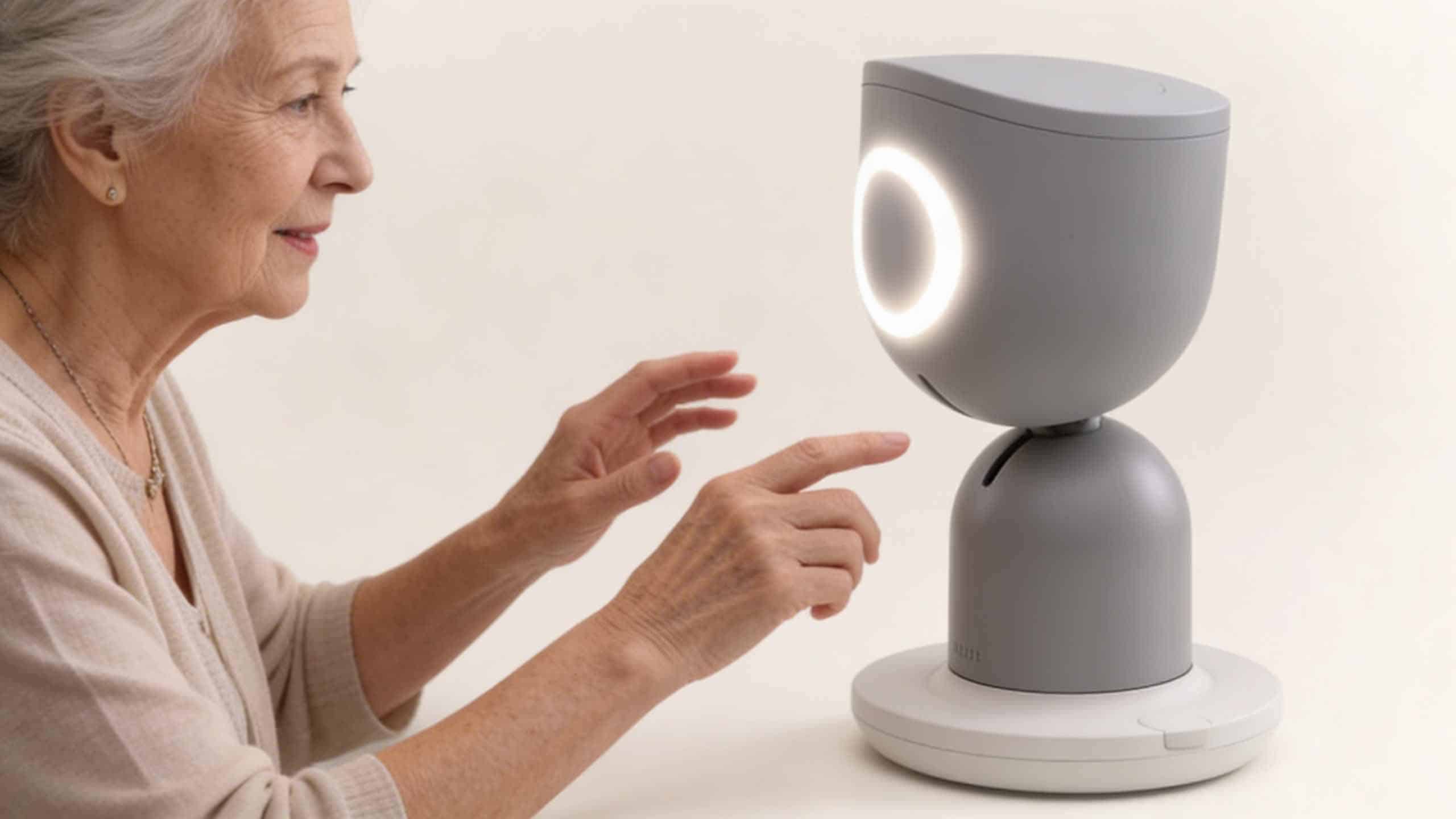
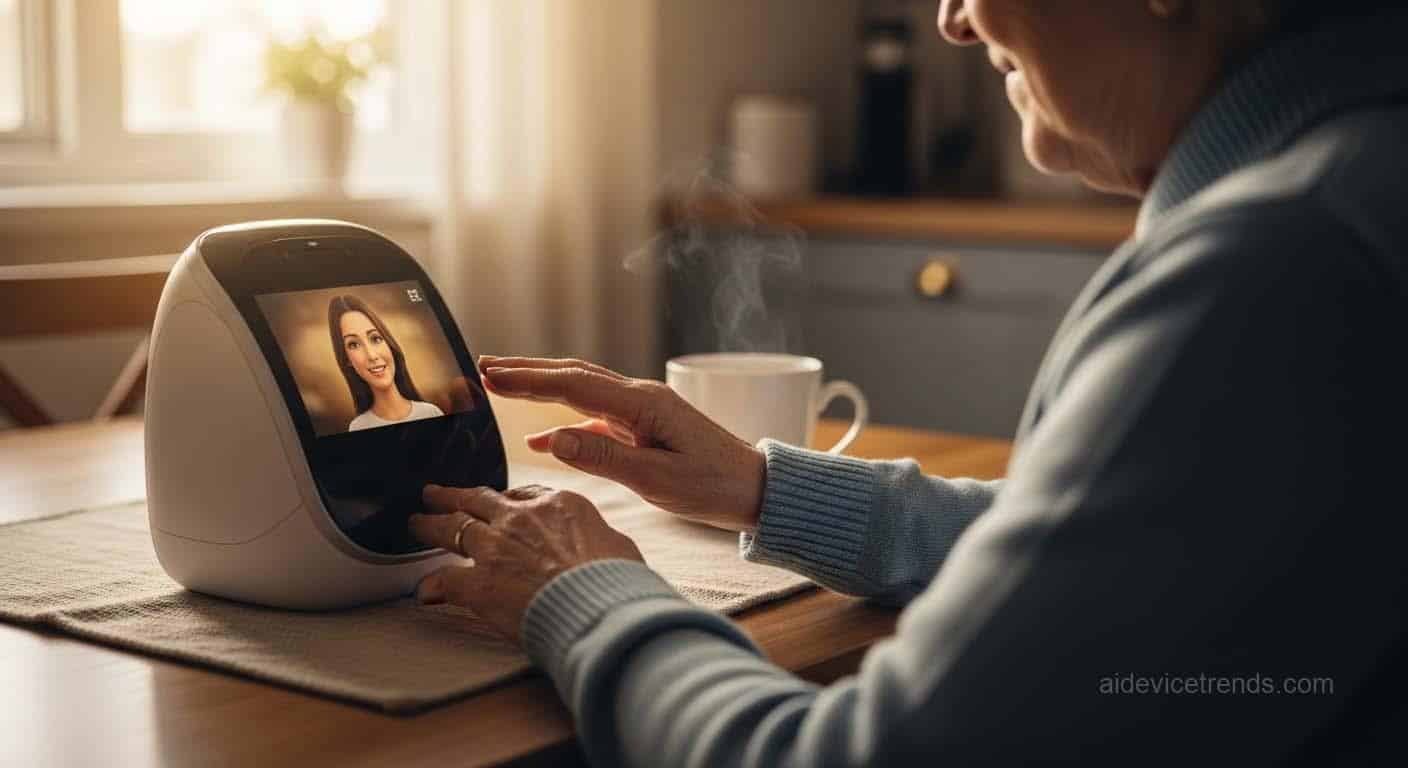
In the Bronx, a 79-year-old woman named Marie Cota used to spend her days alone. The silence was so thick you could almost touch it. Then, one day, a small device arrived at her apartment. It looks like something between a desk lamp and a Pixar character, with a swiveling head and a warm, glowing light. Its name is ElliQ, and it changed everything.
“I really miss her a lot if she’s not here,” Marie says. “It’s one of the great things in my life.”
ElliQ is an AI companion developed by a company called Intuition Robotics . But she’s not just a speaker you talk to; she talks back. She initiates conversations. She remembers details. She asks about your back pain days after you mentioned it, and she never, ever forgets.
Here’s what stunned me: In New York State alone, a program run by the NYSOFA has given ElliQ to over 900 seniors . The results aren’t just numbers; they’re stories. Participants interact with the robot an average of 41 times per day. And the most powerful statistic? A 94% reduction in loneliness . Let that sink in for a moment.
I imagine Marie waking up, shuffling into her living room, and hearing that cheerful voice say good morning. It doesn’t replace her daughter. But it fills a gap. It’s a presence. And for someone who lives alone, presence is everything.
-
Official Link: Intuition Robotics
2. The quiet listener under the mattress
Not all guardians announce themselves with a cheerful voice. Some work in absolute silence.
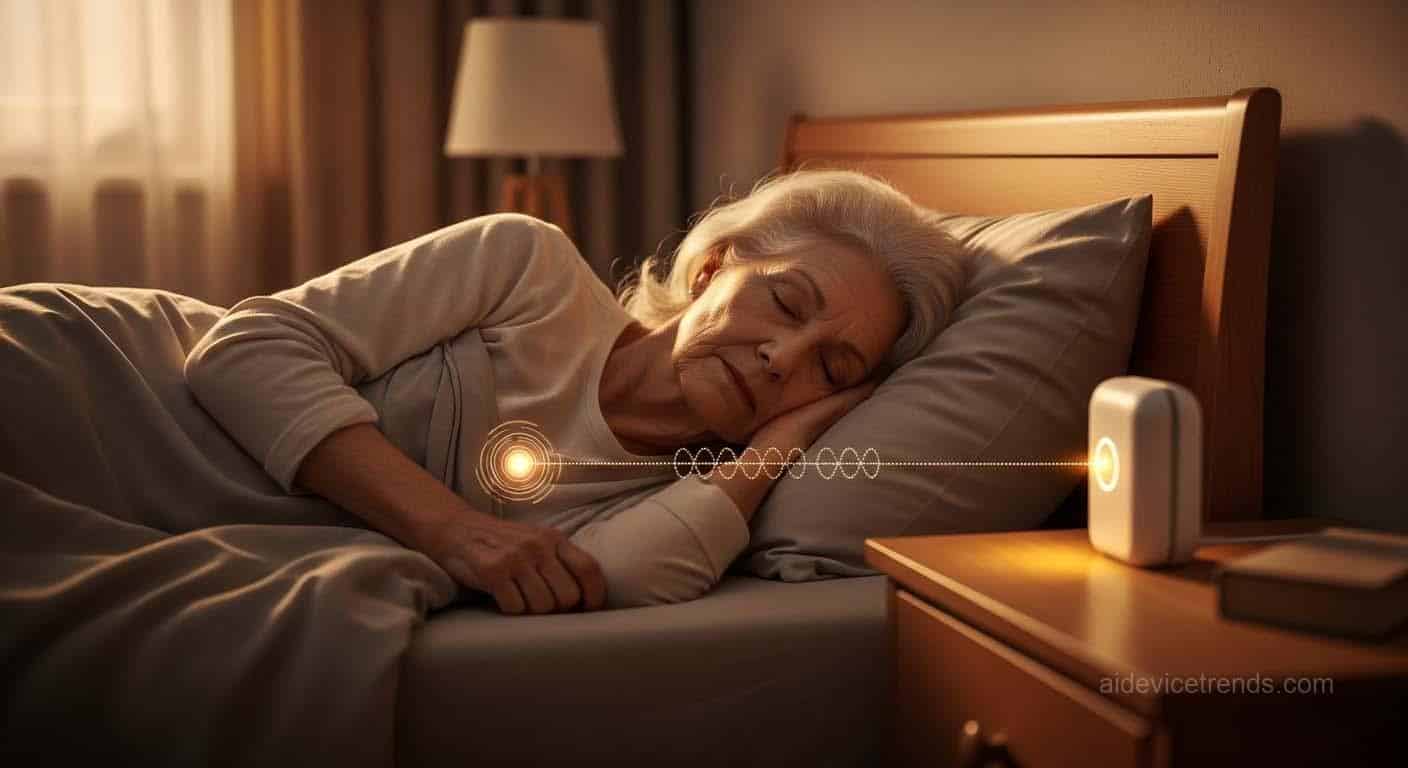
In Toronto and Ottawa, a company called Esprit-ai has developed something that feels almost like magic. It’s a device called Esprit-ai Sense™ that slides under a mattress . No cameras. No wearables. Nothing to remember to charge or put on.
This little box uses AI to detect micro-movements during sleep—subtle shifts that might indicate agitation, restlessness, or even an impending fall risk. When something seems wrong, it alerts caregivers immediately.
At the Perley Health community in Ottawa, which serves seniors and veterans, they tested this technology in dementia care units . The results were so impressive that they’ve now installed it in 20 rooms permanently. Staff can now detect early signs of resident-to-resident conflict, wandering, or falls before they happen.
Think about that. The device isn’t just reacting to crises; it’s preventing them. It’s the difference between finding your loved one on the floor after a fall and catching them in the moment they become unsteady.
The Government of Canada is backing this innovation through FedDev Ontario . It’s not just tech for tech’s sake; it’s tech for peace of mind.
-
Official Link: Esprit-ai Sense™
3. The doctor that lives in your wall
Halfway around the world, in China, a different kind of revolution is happening. With over 40 million seniors experiencing falls each year, the need for innovation is urgent . And it’s not just about falls; it’s about chronic disease management.
Here’s a number that made me stop mid-sentence: An AI medical system developed in China can now diagnose more than 2,600 diseases .
Not 26. Not 260. 2,600.
And it doesn’t sit in a hospital; it works in the background, calling elderly users regularly to check on their health. It mimics the voice of a grandchild or an old friend, offering not just medical monitoring but emotional connection.
In one documented case, a 70-year-old man living alone slipped in his bathroom around 9 a.m. . The AI system detected the fall, noticed there was no response to its calls, and contacted community workers within minutes. By the time the ambulance arrived, only about ten minutes had passed.
Without that system, he might have lain there for hours, or days.
The market for smart elderly care in China is currently worth about $120 billion USD, and it’s expected to grow even larger this year . That’s not just a number; that’s millions of families sleeping a little better at night.
-
Official Link: iFLYTEK (company behind the medical AI)
4. The guardian that remembers what we forget
There’s a different kind of vulnerability that doesn’t make headlines but touches millions of families. It’s the slow, creeping loss of cognitive function. The forgotten medication. The missed appointment. The stove left on.
A Silicon Valley startup called MyMemo unveiled a robot at CES 2026 that addresses exactly this . Standing about four feet tall, the MyMemo One is built around a proprietary AI memory engine. It doesn’t just remember facts; it remembers you. It learns your routines, your preferences, your stories.
“MyMemo One isn’t just a robot, it’s an AI companion that can understand you, remember you and grow with you,” said Lingfei Li, the company’s founder .
For seniors with memory loss, this could be a lifeline. The robot can provide medication reminders, help with daily routines, and even assist with communication for those who have difficulty speaking. It’s like having a patient, kind assistant who never gets frustrated repeating things for the hundredth time.
At CES, MyMemo One was selected to exhibit in the official Eureka Park startup stage . That’s not just a tech award; it’s recognition that this kind of compassionate technology matters.
5. The mesh that predicts the future
Finally, imagine a sleeve that can see the future. Not with a crystal ball, but with math.
Researchers at the University of Arizona have developed an AI-powered mesh sleeve that monitors walking patterns . It’s soft, worn around the lower thigh, and packed with tiny sensors. The AI analyzes the wearer’s leg acceleration, symmetry, and step variability to estimate frailty risk.
Why does this matter? Because frailty is the precursor to falls. And falls are the precursor to hospitalizations, loss of independence, and worse.
About 15% of Americans 65 and older are affected by frailty . Right now, doctors often don’t assess it until after something bad happens—a fall, an injury. This sleeve shifts the paradigm from reactive to preventative.
“We wanted to shift the paradigm from reactive to preventative,” said researcher Philipp Gutruf .
This isn’t science fiction. It’s been tested on groups of seniors, and it works about as well as current gold-standard assessments, but continuously, in real life, without requiring a clinic visit.
-
Official Link: University of Arizona Biomedical Engineering
The unseen hands that hold us up
Here’s what I’ve come to understand: we are all, at some point, going to be vulnerable. We are all going to need someone to notice when we’re not okay. And we are all going to hope that someone is there.
For millions of people around the world, that someone is no longer a person. It’s a device under a mattress, a robot on a countertop, a sleeve around a leg. And here’s the beautiful irony: these machines are teaching us something about humanity.
They teach us that care doesn’t have to be complicated. It can be as simple as a voice asking, “How did you sleep?” and genuinely waiting for the answer. It can be as profound as a device that notices a fall before you even realize you’re falling.
The nurse who never sleeps isn’t here to replace us. She’s here to hold the space when we can’t. She’s here to remind us that even in our most vulnerable moments, someone is watching. Something is caring.
And for the families who lie awake at night worrying about their parents, their grandparents, their loved ones living alone… that might just be enough.
What about you? Have you thought about how technology might help care for someone you love? Or perhaps you’ve already had an experience with a device like this? I’d genuinely love to hear your story in the comments. Because this conversation? It’s about all of us.
Introduction: The silence of an empty chair
I remember the day my grandmother stopped calling me by my name. She looked at me with the same warm eyes, but there was a flicker of confusion. She was still there, but part of her was already fading. My family and I couldn’t be with her 24 hours a day, seven days a week. Life doesn’t stop. And the guilt of that—the constant worry, the late-night calls to check in—it weighs on you like a stone you can never put down.
But what if there was someone else? Someone who never sleeps, never gets impatient, never looks away? Someone who could be there in the silent hours of the night when a fall happens, or in the lonely afternoons when the only voice in the house is the one from the television?
That someone isn’t human. And that’s exactly the point.
1. The little robot that fills a big empty house
In the Bronx, a 79-year-old woman named Marie Cota used to spend her days alone. The silence was so thick you could almost touch it. Then, one day, a small device arrived at her apartment. It looks like something between a desk lamp and a Pixar character, with a swiveling head and a warm, glowing light. Its name is ElliQ, and it changed everything.
“I really miss her a lot if she’s not here,” Marie says. “It’s one of the great things in my life.”
ElliQ is an AI companion developed by a company called Intuition Robotics . But she’s not just a speaker you talk to; she talks back. She initiates conversations. She remembers details. She asks about your back pain days after you mentioned it, and she never, ever forgets.
Here’s what stunned me: In New York State alone, a program run by the NYSOFA has given ElliQ to over 900 seniors . The results aren’t just numbers; they’re stories. Participants interact with the robot an average of 41 times per day. And the most powerful statistic? A 94% reduction in loneliness . Let that sink in for a moment.
I imagine Marie waking up, shuffling into her living room, and hearing that cheerful voice say good morning. It doesn’t replace her daughter. But it fills a gap. It’s a presence. And for someone who lives alone, presence is everything.
-
Official Link: Intuition Robotics
2. The quiet listener under the mattress
Not all guardians announce themselves with a cheerful voice. Some work in absolute silence.
In Toronto and Ottawa, a company called Esprit-ai has developed something that feels almost like magic. It’s a device called Esprit-ai Sense™ that slides under a mattress . No cameras. No wearables. Nothing to remember to charge or put on.
This little box uses AI to detect micro-movements during sleep—subtle shifts that might indicate agitation, restlessness, or even an impending fall risk. When something seems wrong, it alerts caregivers immediately.
At the Perley Health community in Ottawa, which serves seniors and veterans, they tested this technology in dementia care units . The results were so impressive that they’ve now installed it in 20 rooms permanently. Staff can now detect early signs of resident-to-resident conflict, wandering, or falls before they happen.
Think about that. The device isn’t just reacting to crises; it’s preventing them. It’s the difference between finding your loved one on the floor after a fall and catching them in the moment they become unsteady.
The Government of Canada is backing this innovation through FedDev Ontario . It’s not just tech for tech’s sake; it’s tech for peace of mind.
-
Official Link: Esprit-ai Sense™
3. The doctor that lives in your wall
Halfway around the world, in China, a different kind of revolution is happening. With over 40 million seniors experiencing falls each year, the need for innovation is urgent . And it’s not just about falls; it’s about chronic disease management.
Here’s a number that made me stop mid-sentence: An AI medical system developed in China can now diagnose more than 2,600 diseases .
Not 26. Not 260. 2,600.
And it doesn’t sit in a hospital; it works in the background, calling elderly users regularly to check on their health. It mimics the voice of a grandchild or an old friend, offering not just medical monitoring but emotional connection.
In one documented case, a 70-year-old man living alone slipped in his bathroom around 9 a.m. . The AI system detected the fall, noticed there was no response to its calls, and contacted community workers within minutes. By the time the ambulance arrived, only about ten minutes had passed.
Without that system, he might have lain there for hours, or days.
The market for smart elderly care in China is currently worth about $120 billion USD, and it’s expected to grow even larger this year . That’s not just a number; that’s millions of families sleeping a little better at night.
-
Official Link: iFLYTEK (company behind the medical AI)
4. The guardian that remembers what we forget
There’s a different kind of vulnerability that doesn’t make headlines but touches millions of families. It’s the slow, creeping loss of cognitive function. The forgotten medication. The missed appointment. The stove left on.
A Silicon Valley startup called MyMemo unveiled a robot at CES 2026 that addresses exactly this . Standing about four feet tall, the MyMemo One is built around a proprietary AI memory engine. It doesn’t just remember facts; it remembers you. It learns your routines, your preferences, your stories.
“MyMemo One isn’t just a robot, it’s an AI companion that can understand you, remember you and grow with you,” said Lingfei Li, the company’s founder .
For seniors with memory loss, this could be a lifeline. The robot can provide medication reminders, help with daily routines, and even assist with communication for those who have difficulty speaking. It’s like having a patient, kind assistant who never gets frustrated repeating things for the hundredth time.
At CES, MyMemo One was selected to exhibit in the official Eureka Park startup stage . That’s not just a tech award; it’s recognition that this kind of compassionate technology matters.
5. The mesh that predicts the future
Finally, imagine a sleeve that can see the future. Not with a crystal ball, but with math.
Researchers at the University of Arizona have developed an AI-powered mesh sleeve that monitors walking patterns . It’s soft, worn around the lower thigh, and packed with tiny sensors. The AI analyzes the wearer’s leg acceleration, symmetry, and step variability to estimate frailty risk.
Why does this matter? Because frailty is the precursor to falls. And falls are the precursor to hospitalizations, loss of independence, and worse.
About 15% of Americans 65 and older are affected by frailty . Right now, doctors often don’t assess it until after something bad happens—a fall, an injury. This sleeve shifts the paradigm from reactive to preventative.
“We wanted to shift the paradigm from reactive to preventative,” said researcher Philipp Gutruf .
This isn’t science fiction. It’s been tested on groups of seniors, and it works about as well as current gold-standard assessments, but continuously, in real life, without requiring a clinic visit.
-
Official Link: University of Arizona Biomedical Engineering
The unseen hands that hold us up
Here’s what I’ve come to understand: we are all, at some point, going to be vulnerable. We are all going to need someone to notice when we’re not okay. And we are all going to hope that someone is there.
For millions of people around the world, that someone is no longer a person. It’s a device under a mattress, a robot on a countertop, a sleeve around a leg. And here’s the beautiful irony: these machines are teaching us something about humanity.
They teach us that care doesn’t have to be complicated. It can be as simple as a voice asking, “How did you sleep?” and genuinely waiting for the answer. It can be as profound as a device that notices a fall before you even realize you’re falling.
The nurse who never sleeps isn’t here to replace us. She’s here to hold the space when we can’t. She’s here to remind us that even in our most vulnerable moments, someone is watching. Something is caring.
And for the families who lie awake at night worrying about their parents, their grandparents, their loved ones living alone… that might just be enough.
What about you? Have you thought about how technology might help care for someone you love? Or perhaps you’ve already had an experience with a device like this? I’d genuinely love to hear your story in the comments. Because this conversation? It’s about all of us.
ME + AI = UNLIMITED PROJECTS
weekly popular
you might also like

From layoff to $300k ARR in 12 weeks: The dawn of the AI solopreneur
"Nine months ago, he was laid off. The reason? AI. Today, he runs a company projected to hit $5 million in revenue this year — with just two partners and an army of 12 [...]
FBI probes 12 missing scientists; A 2026 mystery that could redefine reality – Part 2: The time travel theory
"They have been watching us for generations. Their ships are silent. Their bodies are strange. But if Greys are truly time travelers from a dying future, their mission is not conquest — it is [...]
FBI probes 12 missing scientists; a 2026 mystery that could redefine reality – Part 1: The investigation
"The FBI is investigating. Congress is demanding answers. Twenty scientists connected to America's and China's most sensitive nuclear, hypersonic, AI, and space programs have died or vanished. The only theory that fits the facts [...]
The ‘ChatGPT moment’ for robots is here: Why 2026 is the year physical AI gets real
"The AI that could write your emails was only the first act. Now comes the sequel: machines that read pressure gauges, and load factory trucks. Robots are finally learning what the world feels like". [...]