Rejuvenation therapy with AI: how far is too far?
Introduction: The echo of a childhood wish
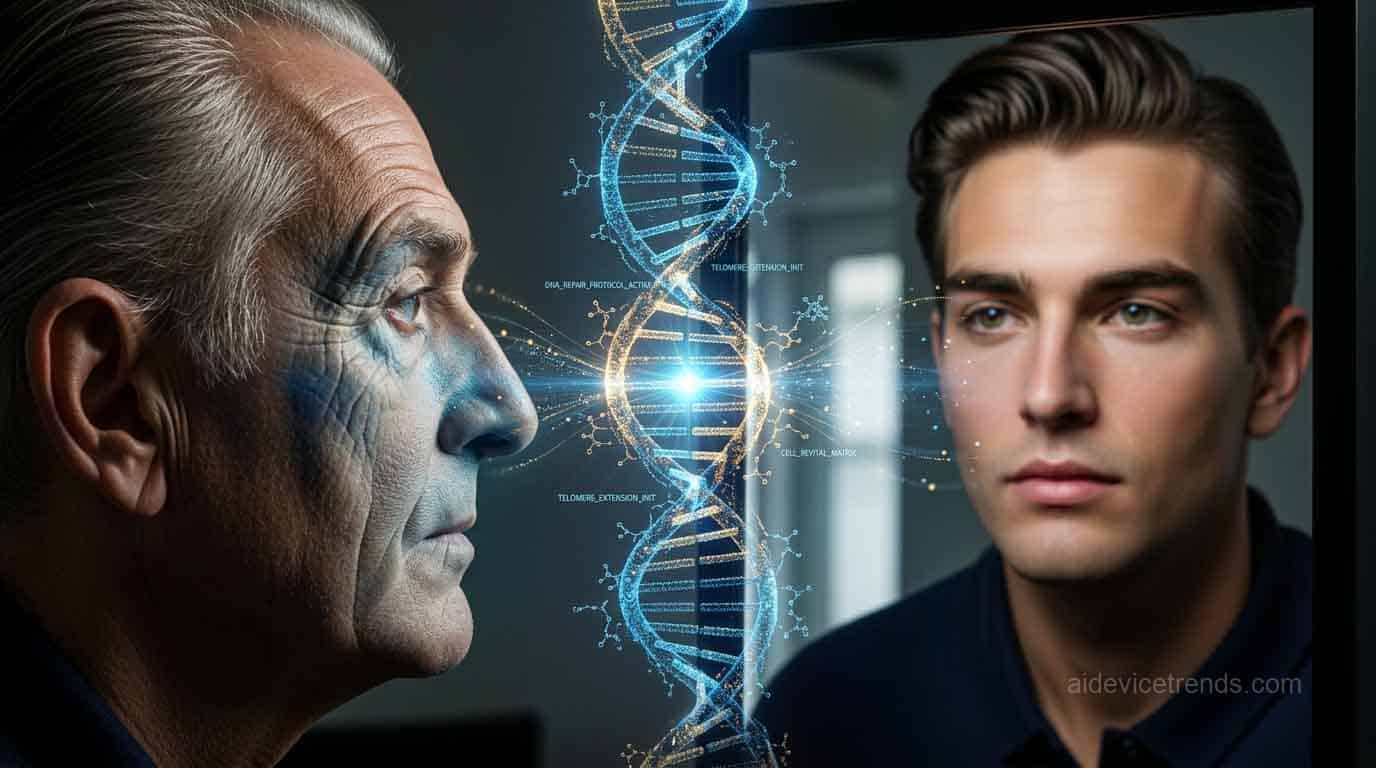
I remember watching cartoons as a kid, mesmerized by the idea of a “fountain of youth.” It seemed like the ultimate fantasy: drink the water, stay young forever. I never imagined that, decades later, I would be reading about something eerily similar—not in a fairy tale, but in a clinical trial report.
Today, that fantasy is knocking on the door of reality. Artificial intelligence is helping scientists decode aging at a cellular level, and therapies designed to reverse it are entering human trials.
But as we stand on the edge of this new era, a quiet, uncomfortable question begins to whisper: Even if we can turn back time, should we? And where do we draw the line between healing and redefining what it means to be human?
1. The quiet revolution inside our cells
For most of history, aging was a one-way street. We accepted wrinkles, fatigue, and disease as inevitable consequences of time. But in 2026, that certainty is crumbling.
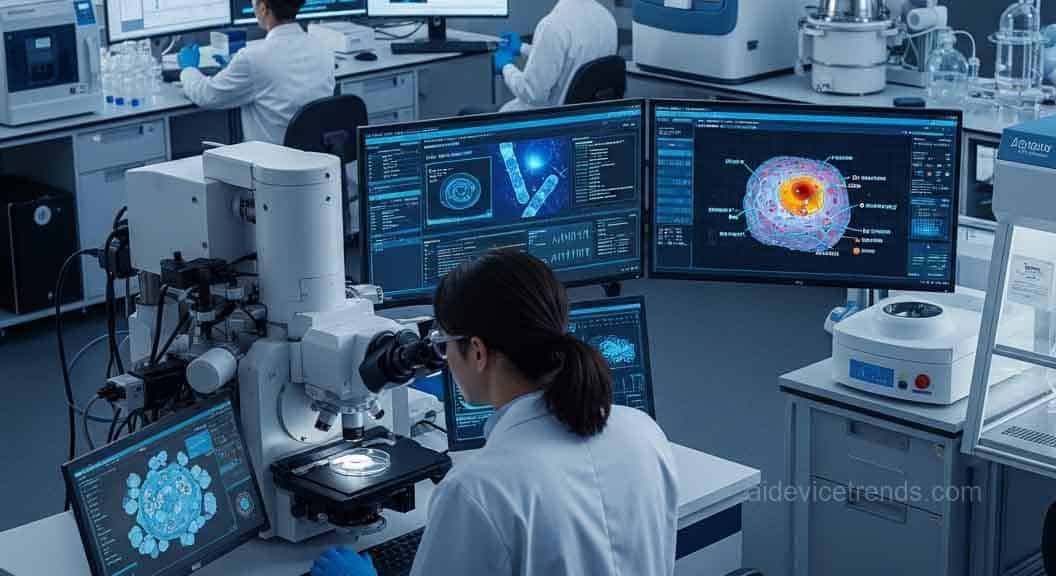
According to the Korea Research Institute of Bioscience and Biotechnology (KRIBB), one of the top “Future Bio-Technologies” is the virtual cell: an AI-powered simulation of human cells that can predict how they respond to treatments. Another is RNA therapy, which uses tiny molecules to revert old, dysfunctional cells back to a youthful state.
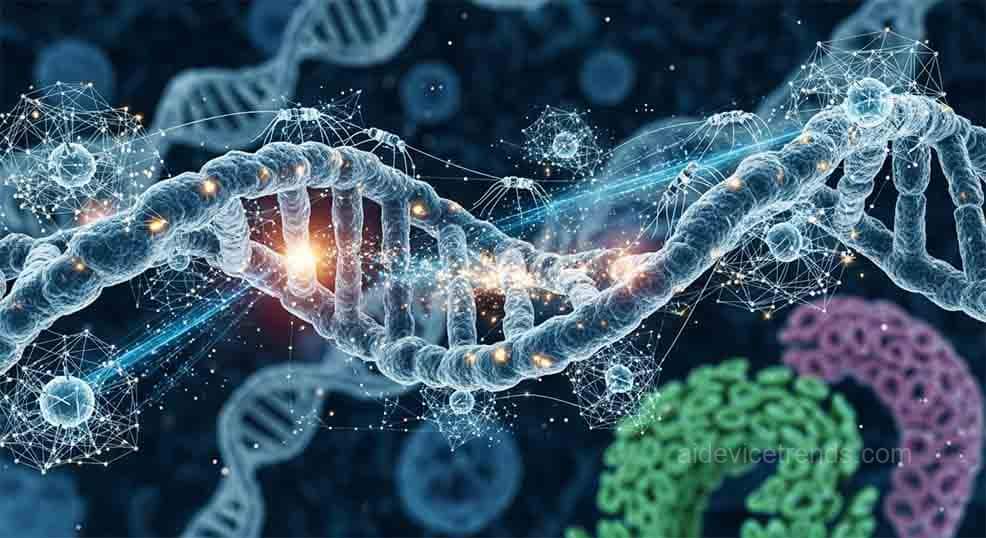
This is not about looking younger. It’s about being younger—at the molecular level.
A 10-person biotech team, Junevity, is using OpenAI models to reprogram aging cells, aiming to treat diseases like Parkinson’s and Type 2 diabetes. Using AI, they narrowed 20 potential targets down to three, accelerating a process that would have taken months.
The clock is no longer a passive measure of time passing. It is becoming a machine we are learning to rewind.
2. The first step: a human trial begins
Just weeks ago, on March 29, 2026, the FDA greenlit the first human trial specifically designed to reverse aging. The company, Life Biosciences, co-founded by Harvard professor David Sinclair, is using a technique called cellular reprogramming.
In simple terms, they inject a virus into the eye of glaucoma patients. The virus carries genes that act like a “reset button” for cells, turning back their internal clock. The goal is to treat blindness, but the implications are much larger.
If this works for eyes, what about muscles, organs, or entire bodies?
We are no longer just patching up the broken parts. We are teaching the body to rebuild itself.
3. The tools of rejuvenation: how AI accelerates the dream
None of this would be possible without AI. The biology of aging is incredibly complex. But AI models can now analyze billions of data points to spot patterns humans would never see.
At CES 2026, the Longevity Mirror used AI to scan a person’s face and provide a “Longevity Score” based on facial blood flow, predicting risks for heart disease and diabetes in seconds. Another AI-powered platform, ClockBase, sifted through massive datasets to identify thousands of potential age-modifying compounds.
Even big business is taking notice. Biophytis and LynxKite recently expanded their partnership to use AI for discovering drugs that target sarcopenia, a degenerative muscle disease associated with aging. Meanwhile, the market for age-reversal is now a $50 billion industry.
4. The first ethical flicker: when “cure” becomes “enhancement”
This is where the paseo takes a turn.
Treating disease is one thing. Eradicating glaucoma, Parkinson’s, or arthritis is a moral good. But what happens when the same technology is used not to heal a sick person, but to “upgrade” a healthy one?
If you can reverse the age of your cells, at what point do you stop? At 50? 40? 30?
Some futurists, like Ray Kurzweil, speak of a “longevity escape velocity“—a point where science extends life faster than time passes, potentially leading to indefinite lifespans.
But here’s the question that lingers: Would a world without aging still be a human one? Our sense of urgency, our love for the moment, our appreciation for a sunset—so much of it is shaped by the awareness that time is finite.
We may gain decades of life, but will we lose the very fragility that makes life precious?
5. The fear of a new divide
I once read that every great technology creates a new inequality. The printing press separated the literate from the illiterate. The internet separated the connected from the isolated. Rejuvenation therapy could separate the ageless from the aging.
If these treatments are expensive—and they will be, at first—then only the wealthy will have access. We could see a world where billionaires fund their own biological immortality while the rest face the same old clock.
Karl Pfleger, an investor in longevity science, called cellular reprogramming “the AI of the bio world”. But AI itself is already raising questions about bias and access. When we turn that same power on our own biology, the stakes become even higher.
6. The wisdom of limits
There is a story from ancient Greece about Tithonus, a mortal who was granted eternal life but not eternal youth. He aged forever, trapped in a body that would not die. The cautionary tale reminds us that “more” is not always better.
The Japanese concept of “tsurezure” describes the pleasure of doing nothing, of letting time pass without urgency. It’s a quiet beauty found in impermanence.
If AI gives us the power to erase time, will we also erase our capacity for tsurezure?
Perhaps the real question is not “how long can we live?” but “how well can we live the time we have?”
We are learning to edit the software of life. But maybe the most humane edit is the one that knows when to stop.
7. The path forward: a pause for reflection
So far, we have discussed the science, the trials, and the dreams. But the most important part of this journey is still ahead: the conversation.
In a world where AI can help us reprogram our own biology, we need new ethics, not just new technologies. Regulations are already being drafted to address the risks of AI-driven medical interventions. But laws are slow. The questions need to be asked now.
Should there be an age limit for rejuvenation therapy? Should it be available only to treat disease, or for anyone who can pay? And who gets to decide?
I don’t have the answers. But I believe the first step is simply admitting that the questions exist.
We may be the first generation with the tools to overcome aging. But we are also the first that must decide whether to use them—and how.
The most human choice
The technology of rejuvenation is advancing faster than our ability to understand its consequences. In this quiet moment, before the floodgates open, we have a rare opportunity: to choose the world we want, not just accept the one that arrives.
AI can help us live longer. But only we can decide what we live for.
What about you? If you could reset your biological clock, would you do it? And where would you draw the line? I’d love to hear your thoughts in the comments.
Introduction: The echo of a childhood wish
I remember watching cartoons as a kid, mesmerized by the idea of a “fountain of youth.” It seemed like the ultimate fantasy: drink the water, stay young forever. I never imagined that, decades later, I would be reading about something eerily similar—not in a fairy tale, but in a clinical trial report.
Today, that fantasy is knocking on the door of reality. Artificial intelligence is helping scientists decode aging at a cellular level, and therapies designed to reverse it are entering human trials.
But as we stand on the edge of this new era, a quiet, uncomfortable question begins to whisper: Even if we can turn back time, should we? And where do we draw the line between healing and redefining what it means to be human?
1. The quiet revolution inside our cells
For most of history, aging was a one-way street. We accepted wrinkles, fatigue, and disease as inevitable consequences of time. But in 2026, that certainty is crumbling.
According to the Korea Research Institute of Bioscience and Biotechnology (KRIBB), one of the top “Future Bio-Technologies” is the virtual cell: an AI-powered simulation of human cells that can predict how they respond to treatments. Another is RNA therapy, which uses tiny molecules to revert old, dysfunctional cells back to a youthful state.
This is not about looking younger. It’s about being younger—at the molecular level.
A 10-person biotech team, Junevity, is using OpenAI models to reprogram aging cells, aiming to treat diseases like Parkinson’s and Type 2 diabetes. Using AI, they narrowed 20 potential targets down to three, accelerating a process that would have taken months.
The clock is no longer a passive measure of time passing. It is becoming a machine we are learning to rewind.
2. The first step: a human trial begins
Just weeks ago, on March 29, 2026, the FDA greenlit the first human trial specifically designed to reverse aging. The company, Life Biosciences, co-founded by Harvard professor David Sinclair, is using a technique called cellular reprogramming.
In simple terms, they inject a virus into the eye of glaucoma patients. The virus carries genes that act like a “reset button” for cells, turning back their internal clock. The goal is to treat blindness, but the implications are much larger.
If this works for eyes, what about muscles, organs, or entire bodies?
We are no longer just patching up the broken parts. We are teaching the body to rebuild itself.
3. The tools of rejuvenation: how AI accelerates the dream
None of this would be possible without AI. The biology of aging is incredibly complex. But AI models can now analyze billions of data points to spot patterns humans would never see.
At CES 2026, the Longevity Mirror used AI to scan a person’s face and provide a “Longevity Score” based on facial blood flow, predicting risks for heart disease and diabetes in seconds. Another AI-powered platform, ClockBase, sifted through massive datasets to identify thousands of potential age-modifying compounds.
Even big business is taking notice. Biophytis and LynxKite recently expanded their partnership to use AI for discovering drugs that target sarcopenia, a degenerative muscle disease associated with aging. Meanwhile, the market for age-reversal is now a $50 billion industry.
4. The first ethical flicker: when “cure” becomes “enhancement”
This is where the paseo takes a turn.
Treating disease is one thing. Eradicating glaucoma, Parkinson’s, or arthritis is a moral good. But what happens when the same technology is used not to heal a sick person, but to “upgrade” a healthy one?
If you can reverse the age of your cells, at what point do you stop? At 50? 40? 30?
Some futurists, like Ray Kurzweil, speak of a “longevity escape velocity“—a point where science extends life faster than time passes, potentially leading to indefinite lifespans.
But here’s the question that lingers: Would a world without aging still be a human one? Our sense of urgency, our love for the moment, our appreciation for a sunset—so much of it is shaped by the awareness that time is finite.
We may gain decades of life, but will we lose the very fragility that makes life precious?
5. The fear of a new divide
I once read that every great technology creates a new inequality. The printing press separated the literate from the illiterate. The internet separated the connected from the isolated. Rejuvenation therapy could separate the ageless from the aging.
If these treatments are expensive—and they will be, at first—then only the wealthy will have access. We could see a world where billionaires fund their own biological immortality while the rest face the same old clock.
Karl Pfleger, an investor in longevity science, called cellular reprogramming “the AI of the bio world”. But AI itself is already raising questions about bias and access. When we turn that same power on our own biology, the stakes become even higher.
6. The wisdom of limits
There is a story from ancient Greece about Tithonus, a mortal who was granted eternal life but not eternal youth. He aged forever, trapped in a body that would not die. The cautionary tale reminds us that “more” is not always better.
The Japanese concept of “tsurezure” describes the pleasure of doing nothing, of letting time pass without urgency. It’s a quiet beauty found in impermanence.
If AI gives us the power to erase time, will we also erase our capacity for tsurezure?
Perhaps the real question is not “how long can we live?” but “how well can we live the time we have?”
We are learning to edit the software of life. But maybe the most humane edit is the one that knows when to stop.
7. The path forward: a pause for reflection
So far, we have discussed the science, the trials, and the dreams. But the most important part of this journey is still ahead: the conversation.
In a world where AI can help us reprogram our own biology, we need new ethics, not just new technologies. Regulations are already being drafted to address the risks of AI-driven medical interventions. But laws are slow. The questions need to be asked now.
Should there be an age limit for rejuvenation therapy? Should it be available only to treat disease, or for anyone who can pay? And who gets to decide?
I don’t have the answers. But I believe the first step is simply admitting that the questions exist.
We may be the first generation with the tools to overcome aging. But we are also the first that must decide whether to use them—and how.
The most human choice
The technology of rejuvenation is advancing faster than our ability to understand its consequences. In this quiet moment, before the floodgates open, we have a rare opportunity: to choose the world we want, not just accept the one that arrives.
AI can help us live longer. But only we can decide what we live for.
What about you? If you could reset your biological clock, would you do it? And where would you draw the line? I’d love to hear your thoughts in the comments.
ME + AI = UNLIMITED PROJECTS
weekly popular
you might also like

From layoff to $300k ARR in 12 weeks: The dawn of the AI solopreneur
"Nine months ago, he was laid off. The reason? AI. Today, he runs a company projected to hit $5 million in revenue this year — with just two partners and an army of 12 [...]

FBI probes 12 missing scientists; A 2026 mystery that could redefine reality – Part 2: The time travel theory
"They have been watching us for generations. Their ships are silent. Their bodies are strange. But if Greys are truly time travelers from a dying future, their mission is not conquest — it is [...]

FBI probes 12 missing scientists; a 2026 mystery that could redefine reality – Part 1: The investigation
"The FBI is investigating. Congress is demanding answers. Twenty scientists connected to America's and China's most sensitive nuclear, hypersonic, AI, and space programs have died or vanished. The only theory that fits the facts [...]
The ‘ChatGPT moment’ for robots is here: Why 2026 is the year physical AI gets real
"The AI that could write your emails was only the first act. Now comes the sequel: machines that read pressure gauges, and load factory trucks. Robots are finally learning what the world feels like". [...]