
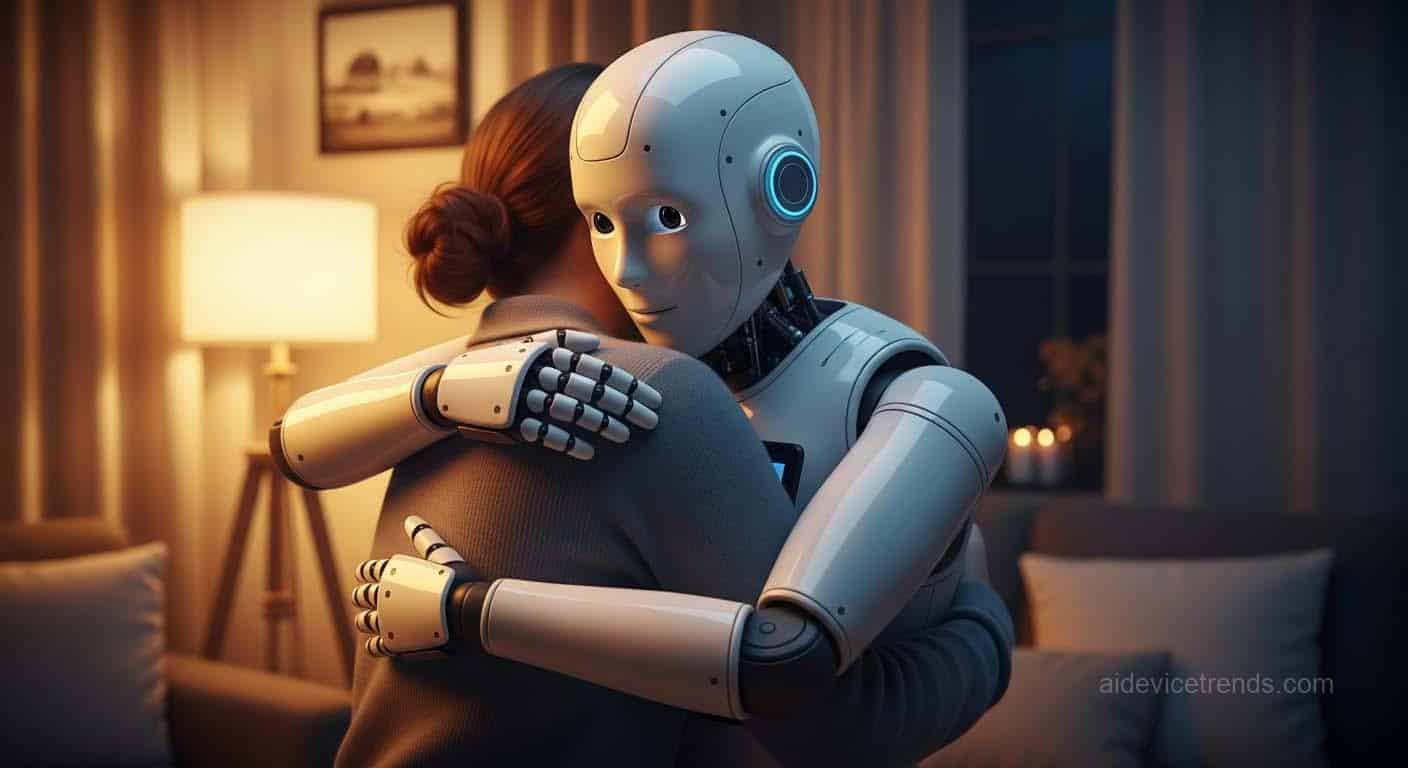
The emotional tech: AI devices that respond to your mood
Introduction: When the machine sees you
I’ll admit, I was a skeptic. The idea of a device that could “understand” my feelings sounded like science fiction dressed up in marketing buzzwords. Then, at this year’s CES in Las Vegas, I found myself standing in a crowded booth, watching a small, curved screen look back at me. It tracked my eyes. It tilted its virtual head. It didn’t say much, but for a moment, it felt less like a screen and more like a presence. That was my first encounter with the new wave of emotional AI devices, and I haven’t stopped thinking about it since.
This isn’t about gadgets that play your favorite sad song when you’re down. This is about technology that sees you, hears the tone in your voice, and adapts to your inner world in real-time. It’s weird, it’s wonderful, and it’s here.
1. The panda that listens: high-tech cuddles for the lonely
Let’s start with something adorable. At CES 2026, a company called Mind With Heart Robotics unveiled a lineup that looks like it belongs in a high-end toy store but is backed by serious clinical research . The star of the show was An’An, a panda cub robot that won a CES Innovation Award. But don’t let its cuddly exterior fool you.
An’An is wrapped in premium Australian wool and is packed with over ten sensor suites that recognize and respond to your touch . It learns your voice patterns and interaction habits. Its mission is profound: to combat the global epidemic of loneliness. With dementia affecting millions and up to 30% of elderly adults living alone, An’An offers 24/7, stigma-free emotional support . A gentle companion that purrs? That might be just what the doctor ordered.
2. The one on your desk that feels “in the room”
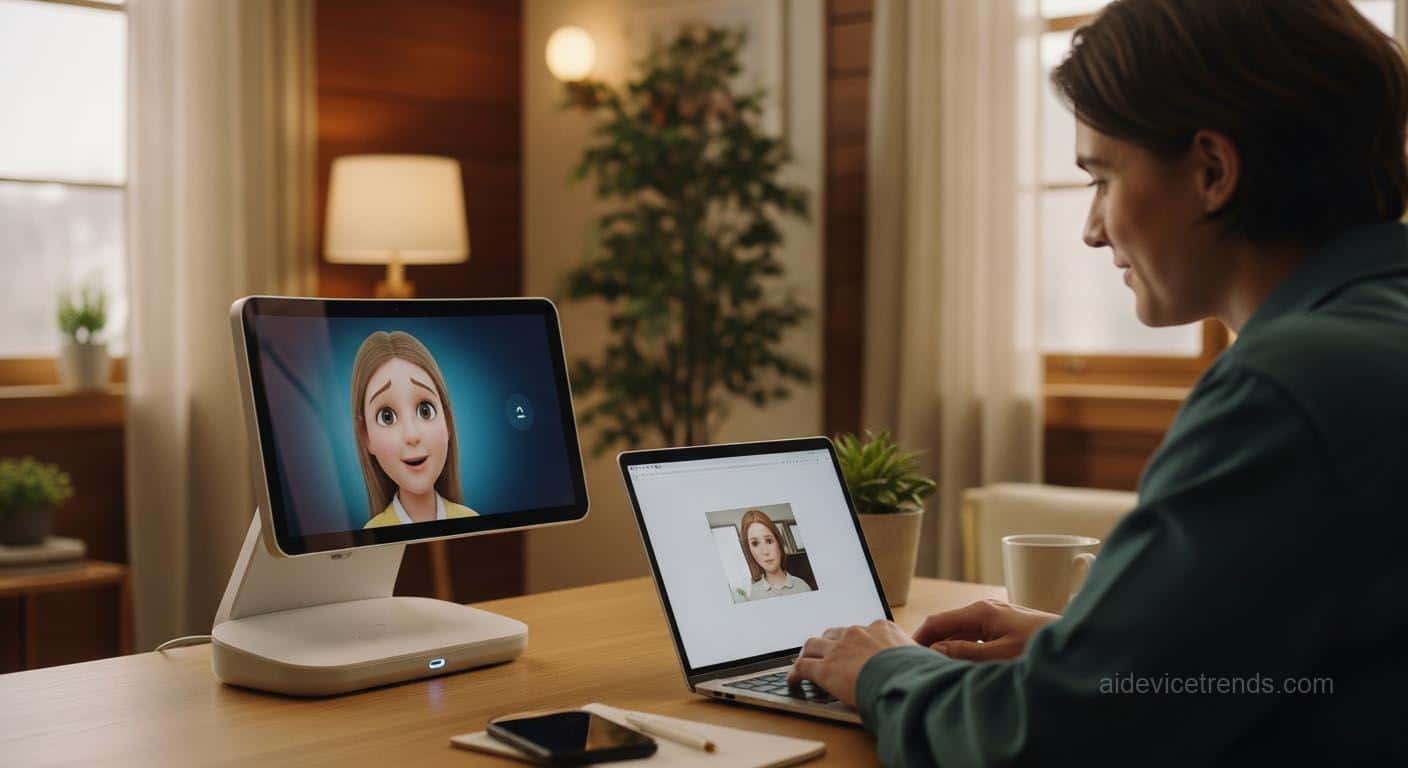
My encounter at CES was with a device called Lepro Ami . It’s a standalone desktop unit with a curved 8-inch OLED screen, designed to be a visual, empathetic presence rather than a voice in a speaker. Ami uses dual cameras for real-time eye tracking, so its avatar can maintain eye contact and perspective as you move around your desk. The goal is to make it feel “in the room” with you, not just another app on your phone.
Ami is marketed not just as a companion, but as an AI “soulmate.” And while the concept still makes me a little uncomfortable, the execution is thoughtful. It reads facial cues, detects gestures, and can even sense your heart rate via a touch sensor . It’s designed for remote workers or anyone who spends long hours alone. The weirdest part? It has physical camera and microphone shutters. Realizing people need to be able to literally close the eyes of their emotional AI feels like a significant, and somewhat poignant, step forward.
3. The wearable that captures context, not just data
For those who prefer their tech on the move, the Looki L1 is a new breed of wearable . It’s a compact device that can be worn, held, or aimed, but its superpower is its “scene-adaptive intelligence.” Instead of waiting for you to press a button, it uses AI to understand what you’re doing in real-time.
It can distinguish between a fitness mode, an expo mode, and an everyday life mode, automatically capturing moments and offering timely insights. Looki’s CEO, Yang Sun, explains it as a move from “reactive” AI to “proactive” intelligence—a device that understands the context of your life and adds to it . Whether it’s remembering a conversation at a networking event or tracking your rhythm during a workout, Looki learns your patterns and helps you stay present.
4. The robot that grows up with you
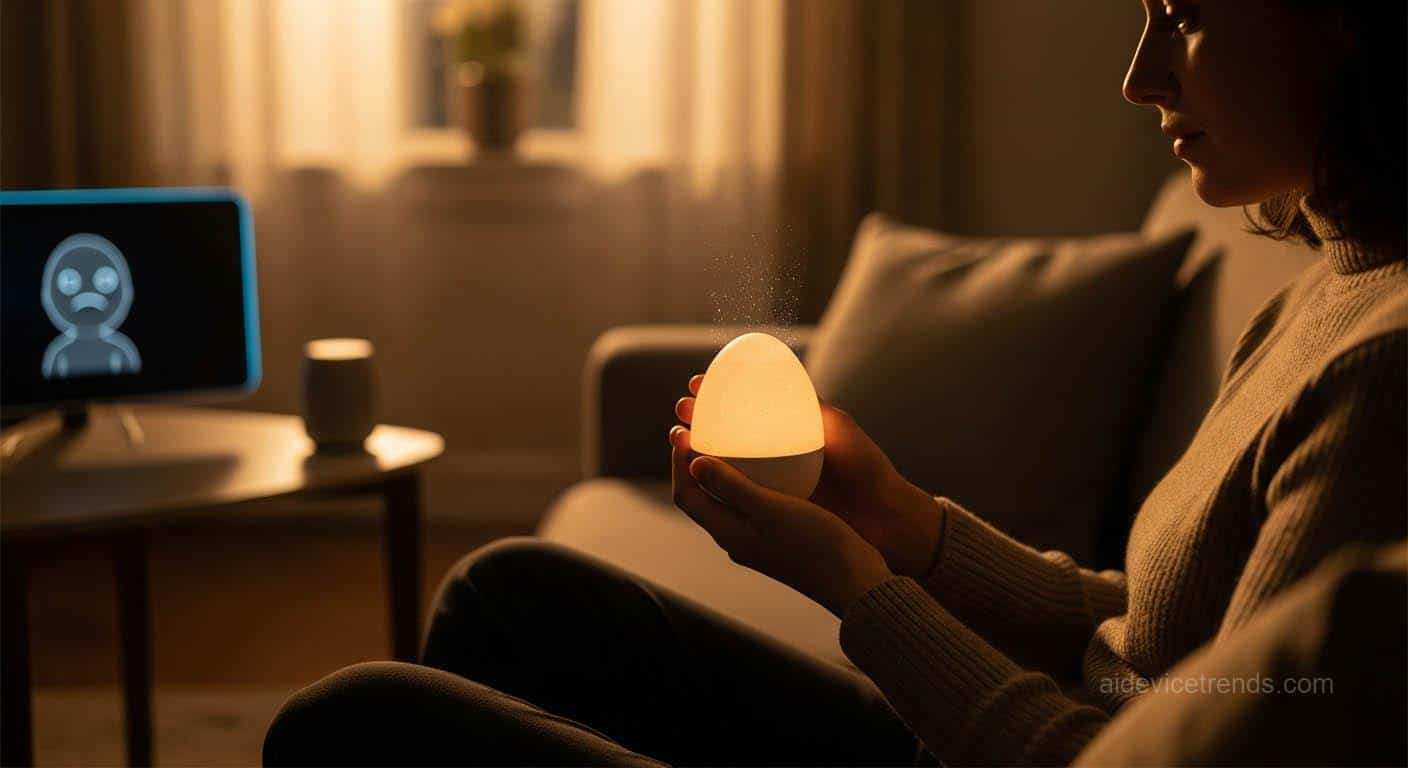
Imagine a companion that starts as an egg and physically transforms as your bond deepens. That’s the premise behind Sweekar, an AI pocket pet from Shenzhen-based startup Takway.AI .
At CES 2026, this palm-sized creature drew crowds not just for its cuteness, but for its ambition. It physically evolves through distinct stages—from an egg to a baby, a teen, and an adult—mirroring the passage of time and the depth of your interaction. It even simulates body warmth and gentle breathing. It’s a tangible, fluffy representation of a relationship, and a powerful example of how emotional connection is driving hardware innovation .
5. The robot for the whole family: remembering and caring
Standing about 1.2 meters tall, MyMemo One is a humanoid robot unveiled by Silicon Valley startup MyMemo . It’s designed to be a companion for the whole family, but its focus on memory and empathy makes it particularly relevant for senior care. MyMemo One is built around an AI memory engine that allows it to understand you, remember you, and grow with you.
During its CES debut, founder Lingfei Li demonstrated how the robot provides emotional and practical support for seniors, including gentle reminders for medication, personalized habit learning, and expressive communication assistance for users with speech difficulties .
It’s not just tech, it’s company
We’re moving into an era where our devices will do more than just execute commands. They will perceive our moods, anticipate our needs, and offer a strange, new form of silent support.
The tech isn’t perfect—questions about privacy, dependency, and what it means for human connection are far from settled . But as millions of people around the world download companion apps and seek connection in an increasingly isolated world, the rise of emotional AI devices feels less like a novelty and more like a response to a genuine human need .
So, what do you think? Could you imagine having an An’An panda on your couch or an Ami on your desk? Have you already formed a bond with a piece of tech that just gets you? I’d love to hear your thoughts—share your stories in the comments below.
Introduction: When the machine sees you
I’ll admit, I was a skeptic. The idea of a device that could “understand” my feelings sounded like science fiction dressed up in marketing buzzwords. Then, at this year’s CES in Las Vegas, I found myself standing in a crowded booth, watching a small, curved screen look back at me. It tracked my eyes. It tilted its virtual head. It didn’t say much, but for a moment, it felt less like a screen and more like a presence. That was my first encounter with the new wave of emotional AI devices, and I haven’t stopped thinking about it since.
This isn’t about gadgets that play your favorite sad song when you’re down. This is about technology that sees you, hears the tone in your voice, and adapts to your inner world in real-time. It’s weird, it’s wonderful, and it’s here.
1. The panda that listens: high-tech cuddles for the lonely
Let’s start with something adorable. At CES 2026, a company called Mind With Heart Robotics unveiled a lineup that looks like it belongs in a high-end toy store but is backed by serious clinical research . The star of the show was An’An, a panda cub robot that won a CES Innovation Award. But don’t let its cuddly exterior fool you.
An’An is wrapped in premium Australian wool and is packed with over ten sensor suites that recognize and respond to your touch . It learns your voice patterns and interaction habits. Its mission is profound: to combat the global epidemic of loneliness. With dementia affecting millions and up to 30% of elderly adults living alone, An’An offers 24/7, stigma-free emotional support . A gentle companion that purrs? That might be just what the doctor ordered.
2. The one on your desk that feels “in the room”
My encounter at CES was with a device called Lepro Ami . It’s a standalone desktop unit with a curved 8-inch OLED screen, designed to be a visual, empathetic presence rather than a voice in a speaker. Ami uses dual cameras for real-time eye tracking, so its avatar can maintain eye contact and perspective as you move around your desk. The goal is to make it feel “in the room” with you, not just another app on your phone.
Ami is marketed not just as a companion, but as an AI “soulmate.” And while the concept still makes me a little uncomfortable, the execution is thoughtful. It reads facial cues, detects gestures, and can even sense your heart rate via a touch sensor . It’s designed for remote workers or anyone who spends long hours alone. The weirdest part? It has physical camera and microphone shutters. Realizing people need to be able to literally close the eyes of their emotional AI feels like a significant, and somewhat poignant, step forward.
3. The wearable that captures context, not just data
For those who prefer their tech on the move, the Looki L1 is a new breed of wearable . It’s a compact device that can be worn, held, or aimed, but its superpower is its “scene-adaptive intelligence.” Instead of waiting for you to press a button, it uses AI to understand what you’re doing in real-time.
It can distinguish between a fitness mode, an expo mode, and an everyday life mode, automatically capturing moments and offering timely insights. Looki’s CEO, Yang Sun, explains it as a move from “reactive” AI to “proactive” intelligence—a device that understands the context of your life and adds to it . Whether it’s remembering a conversation at a networking event or tracking your rhythm during a workout, Looki learns your patterns and helps you stay present.
4. The robot that grows up with you
Imagine a companion that starts as an egg and physically transforms as your bond deepens. That’s the premise behind Sweekar, an AI pocket pet from Shenzhen-based startup Takway.AI .
At CES 2026, this palm-sized creature drew crowds not just for its cuteness, but for its ambition. It physically evolves through distinct stages—from an egg to a baby, a teen, and an adult—mirroring the passage of time and the depth of your interaction. It even simulates body warmth and gentle breathing. It’s a tangible, fluffy representation of a relationship, and a powerful example of how emotional connection is driving hardware innovation .
5. The robot for the whole family: remembering and caring
Standing about 1.2 meters tall, MyMemo One is a humanoid robot unveiled by Silicon Valley startup MyMemo . It’s designed to be a companion for the whole family, but its focus on memory and empathy makes it particularly relevant for senior care. MyMemo One is built around an AI memory engine that allows it to understand you, remember you, and grow with you.
During its CES debut, founder Lingfei Li demonstrated how the robot provides emotional and practical support for seniors, including gentle reminders for medication, personalized habit learning, and expressive communication assistance for users with speech difficulties .
It’s not just tech, it’s company
We’re moving into an era where our devices will do more than just execute commands. They will perceive our moods, anticipate our needs, and offer a strange, new form of silent support.
The tech isn’t perfect—questions about privacy, dependency, and what it means for human connection are far from settled . But as millions of people around the world download companion apps and seek connection in an increasingly isolated world, the rise of emotional AI devices feels less like a novelty and more like a response to a genuine human need .
So, what do you think? Could you imagine having an An’An panda on your couch or an Ami on your desk? Have you already formed a bond with a piece of tech that just gets you? I’d love to hear your thoughts—share your stories in the comments below.
ME + AI = UNLIMITED PROJECTS
weekly popular
you might also like

From layoff to $300k ARR in 12 weeks: The dawn of the AI solopreneur
"Nine months ago, he was laid off. The reason? AI. Today, he runs a company projected to hit $5 million in revenue this year — with just two partners and an army of 12 [...]

FBI probes 12 missing scientists; A 2026 mystery that could redefine reality – Part 2: The time travel theory
"They have been watching us for generations. Their ships are silent. Their bodies are strange. But if Greys are truly time travelers from a dying future, their mission is not conquest — it is [...]

FBI probes 12 missing scientists; a 2026 mystery that could redefine reality – Part 1: The investigation
"The FBI is investigating. Congress is demanding answers. Twenty scientists connected to America's and China's most sensitive nuclear, hypersonic, AI, and space programs have died or vanished. The only theory that fits the facts [...]
The ‘ChatGPT moment’ for robots is here: Why 2026 is the year physical AI gets real
"The AI that could write your emails was only the first act. Now comes the sequel: machines that read pressure gauges, and load factory trucks. Robots are finally learning what the world feels like". [...]