
The last human job: what will we do when AI does everything?
Introduction: The unfinished morning
I woke up this morning without a plan. No urgent emails, no looming deadlines, no meetings to brace for. Just a slow, golden light spilling across the floor and the strange, unfamiliar gift of an empty day.
For a moment, I felt free. Then, a whisper of unease: Is this all there is?
I’m not retired. I’m not sick. I’m just a person living through a quiet revolution—one where AI is quietly taking over the tasks that once filled my days.
This isn’t a dystopian headline. It’s a slow, steady shift that most of us are already feeling. And it’s forcing us to confront a question we’ve never had to ask before: When the machines do everything, what will we do?
The work has always defined us. It gave us purpose, structure, a place in the tribe. Now, we have to imagine a world where that pillar is gone. It’s not a question about the economy. It’s a question about the soul.
1. The numbers that hum in the background
I’ve read the reports. They’re hard to ignore. In 2025, companies laid off around 55,000 workers specifically due to AI. This year, that number is expected to jump ninefold, to about 502,000 roles across the U.S. economy.
Entry-level hiring is freezing. By the end of 2026, 36% of companies say they will have stopped hiring junior workers entirely. The technology industry alone has already cut 52,000 jobs in the first quarter of 2026, a 40% increase from last year.
These numbers are real. They are unsettling. But they are not the whole story.
A new working paper from a Yale economist named Pascual Restrepo suggests something far stranger: most of today’s work may never be automated, not because AI lacks the capability, but because it simply isn’t important enough to bother replacing.
The robot doesn’t hate you. It just doesn’t see you. Your job might survive, not because you’re irreplaceable, but because you’re irrelevant to the future the machines are building.
Restrepo calls this the “bottleneck” economy. AI will focus its immense computational power on solving humanity’s hardest problems: curing disease, preventing asteroid strikes, mastering fusion energy. Everything else? The arts, hospitality, customer service, even academic research—these may be left to us. Not because we’re better, but because we’re cheaper to keep than to replace.
2. The fear we can’t name
A new term has entered the workplace vocabulary: FOBO—the Fear of Becoming Obsolete. Four in 10 workers now name AI-driven job loss as a primary fear, a share that has nearly doubled in a single year. Sixty-three percent say AI will make the workplace feel less human.
But here’s the quiet truth: FOBO isn’t about getting fired. It’s about becoming irrelevant. It’s the slow, sinking feeling that the skills you spent years building no longer matter. It’s the silence when your phone stops ringing.
A massive new study from MIT offers a surprising antidote to the panic. They found that AI’s march through the labor market looks less like a sudden catastrophe and more like a slow, rising flood. The fear isn’t irrational. It’s just premature. The water is rising, but the floorboards won’t be underwater by next Tuesday.
We are not drowning. We are being asked to learn to swim—not for survival, but for something far stranger: to discover where we actually want to go when no one is telling us the direction.
The researchers estimate that by 2029, AI could complete most text-based tasks with 80% to 95% success rates. That’s not a distant future. That’s just around the corner. But the transition will be gradual enough that we have time to adapt—if we choose to.
3. What happens to the ones who are left?
But let’s be honest. For every displaced accountant or paralegal, there’s a human being with a mortgage, a family, a sense of self tied to a paycheck.
The same Yale paper delivers a sobering conclusion: in a world where AI handles all the essential tasks for economic growth, labor’s share of GDP could approach zero. The owners of the compute—the servers, the chips, the energy—will capture nearly all the wealth.
BlackRock CEO Larry Fink warned that AI “threatens to repeat that pattern at an even larger scale—concentrating wealth among the companies and investors positioned to capture it”.
So what do we do? Universal basic income? Treating computing power as a public resource like land or water? These are the political and ethical questions of our time.
But even if we solve the distribution problem, a deeper question remains: What will we do with our hours?
We have spent centuries defining ourselves by our labor. When that anchor is lifted, we may drift—or we may finally sail to waters we’ve only dreamed of.
4. The meaning that machines can’t touch
Here is the part of the story that the economists and the technologists often miss. The future of human purpose isn’t about finding new jobs. It’s about remembering that we were never just workers.
A remarkable Chinese essay from March 2026 described AI’s evolution as a gradual transfer of human permissions: from the right to labor, to the right to decide, to the right to create, and finally, to the right to define meaning. At the end of this process, what remains is what the author calls our “root permission”: the freedom to set our own goals, to experience the world as only we can, and to give meaning to our own lives.
This is not our end. It is our liberation from being merely useful.
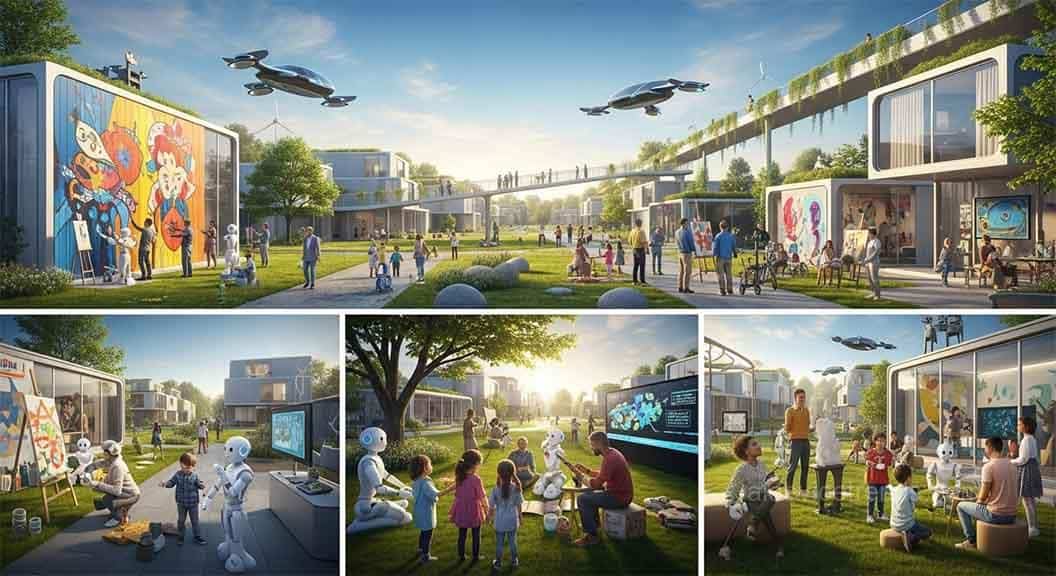
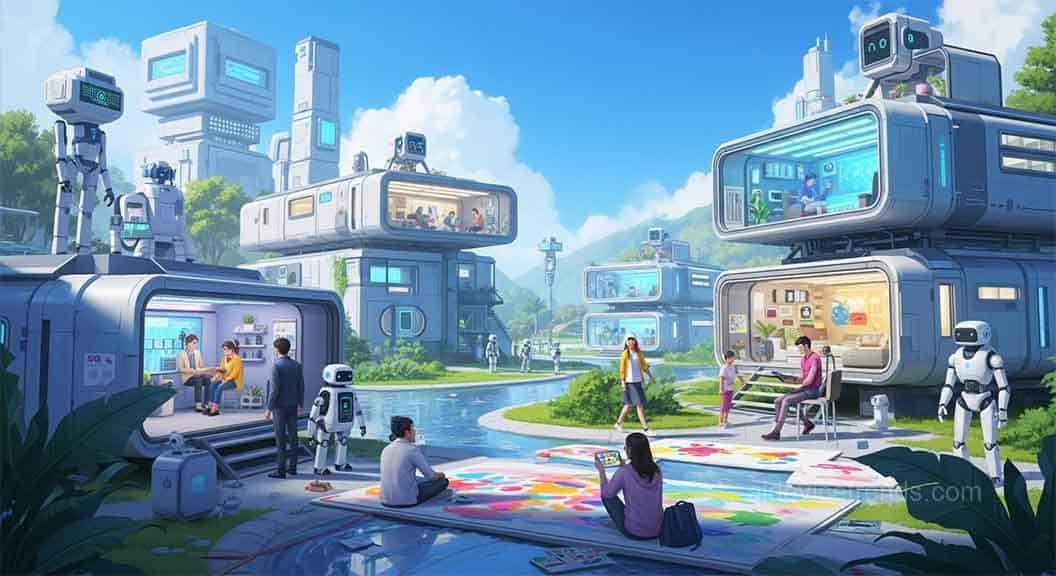
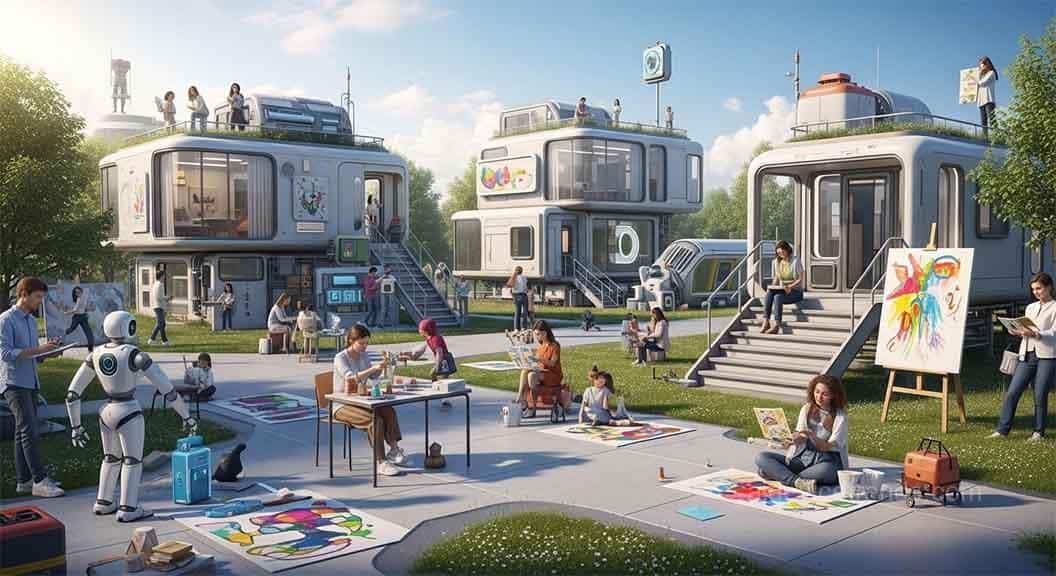
When AI does everything, we won’t be obsolete. We’ll be free. Free to garden, to paint, to argue, to love, to sit in silence, to learn for the joy of learning, to build communities not based on productivity but on genuine connection.
A coalition of AI ethicists recently signed the “Pro-Human AI Declaration,” demanding that AI systems be built with hard-coded safeguards that keep humanity at the helm. They call for strict bans on AI designed to replace human relationships and experiences.
They understand: the machine can do our jobs. But it can never live our lives.
5. The walk
I think about that slow morning again. The one without plans. The golden light. The empty day.
It’s not that I don’t want to work. It’s that I want to work on things that matter. To write not because it’s a job, but because I have something to say. To build not because I need a paycheck, but because I want to leave something behind.
The last human job won’t be CEO or programmer or artist. It will be the one we choose for ourselves, not because we have to, but because we want to.
The shift from “worker” to “meaning-giver” is not a loss. It is a homecoming. We were never designed to be cogs. We were designed to wonder.
The question that remains
Introduction: The unfinished morning
I woke up this morning without a plan. No urgent emails, no looming deadlines, no meetings to brace for. Just a slow, golden light spilling across the floor and the strange, unfamiliar gift of an empty day.
For a moment, I felt free. Then, a whisper of unease: Is this all there is?
I’m not retired. I’m not sick. I’m just a person living through a quiet revolution—one where AI is quietly taking over the tasks that once filled my days.
This isn’t a dystopian headline. It’s a slow, steady shift that most of us are already feeling. And it’s forcing us to confront a question we’ve never had to ask before: When the machines do everything, what will we do?
The work has always defined us. It gave us purpose, structure, a place in the tribe. Now, we have to imagine a world where that pillar is gone. It’s not a question about the economy. It’s a question about the soul.
1. The numbers that hum in the background
I’ve read the reports. They’re hard to ignore. In 2025, companies laid off around 55,000 workers specifically due to AI. This year, that number is expected to jump ninefold, to about 502,000 roles across the U.S. economy.
Entry-level hiring is freezing. By the end of 2026, 36% of companies say they will have stopped hiring junior workers entirely. The technology industry alone has already cut 52,000 jobs in the first quarter of 2026, a 40% increase from last year.
These numbers are real. They are unsettling. But they are not the whole story.
A new working paper from a Yale economist named Pascual Restrepo suggests something far stranger: most of today’s work may never be automated, not because AI lacks the capability, but because it simply isn’t important enough to bother replacing.
The robot doesn’t hate you. It just doesn’t see you. Your job might survive, not because you’re irreplaceable, but because you’re irrelevant to the future the machines are building.
Restrepo calls this the “bottleneck” economy. AI will focus its immense computational power on solving humanity’s hardest problems: curing disease, preventing asteroid strikes, mastering fusion energy. Everything else? The arts, hospitality, customer service, even academic research—these may be left to us. Not because we’re better, but because we’re cheaper to keep than to replace.
2. The fear we can’t name
A new term has entered the workplace vocabulary: FOBO—the Fear of Becoming Obsolete. Four in 10 workers now name AI-driven job loss as a primary fear, a share that has nearly doubled in a single year. Sixty-three percent say AI will make the workplace feel less human.
But here’s the quiet truth: FOBO isn’t about getting fired. It’s about becoming irrelevant. It’s the slow, sinking feeling that the skills you spent years building no longer matter. It’s the silence when your phone stops ringing.
A massive new study from MIT offers a surprising antidote to the panic. They found that AI’s march through the labor market looks less like a sudden catastrophe and more like a slow, rising flood. The fear isn’t irrational. It’s just premature. The water is rising, but the floorboards won’t be underwater by next Tuesday.
We are not drowning. We are being asked to learn to swim—not for survival, but for something far stranger: to discover where we actually want to go when no one is telling us the direction.
The researchers estimate that by 2029, AI could complete most text-based tasks with 80% to 95% success rates. That’s not a distant future. That’s just around the corner. But the transition will be gradual enough that we have time to adapt—if we choose to.
3. What happens to the ones who are left?
But let’s be honest. For every displaced accountant or paralegal, there’s a human being with a mortgage, a family, a sense of self tied to a paycheck.
The same Yale paper delivers a sobering conclusion: in a world where AI handles all the essential tasks for economic growth, labor’s share of GDP could approach zero. The owners of the compute—the servers, the chips, the energy—will capture nearly all the wealth.
BlackRock CEO Larry Fink warned that AI “threatens to repeat that pattern at an even larger scale—concentrating wealth among the companies and investors positioned to capture it”.
So what do we do? Universal basic income? Treating computing power as a public resource like land or water? These are the political and ethical questions of our time.
But even if we solve the distribution problem, a deeper question remains: What will we do with our hours?
We have spent centuries defining ourselves by our labor. When that anchor is lifted, we may drift—or we may finally sail to waters we’ve only dreamed of.
4. The meaning that machines can’t touch
Here is the part of the story that the economists and the technologists often miss. The future of human purpose isn’t about finding new jobs. It’s about remembering that we were never just workers.
A remarkable Chinese essay from March 2026 described AI’s evolution as a gradual transfer of human permissions: from the right to labor, to the right to decide, to the right to create, and finally, to the right to define meaning. At the end of this process, what remains is what the author calls our “root permission”: the freedom to set our own goals, to experience the world as only we can, and to give meaning to our own lives.
This is not our end. It is our liberation from being merely useful.
When AI does everything, we won’t be obsolete. We’ll be free. Free to garden, to paint, to argue, to love, to sit in silence, to learn for the joy of learning, to build communities not based on productivity but on genuine connection.
A coalition of AI ethicists recently signed the “Pro-Human AI Declaration,” demanding that AI systems be built with hard-coded safeguards that keep humanity at the helm. They call for strict bans on AI designed to replace human relationships and experiences.
They understand: the machine can do our jobs. But it can never live our lives.
5. The walk
I think about that slow morning again. The one without plans. The golden light. The empty day.
It’s not that I don’t want to work. It’s that I want to work on things that matter. To write not because it’s a job, but because I have something to say. To build not because I need a paycheck, but because I want to leave something behind.
The last human job won’t be CEO or programmer or artist. It will be the one we choose for ourselves, not because we have to, but because we want to.
The shift from “worker” to “meaning-giver” is not a loss. It is a homecoming. We were never designed to be cogs. We were designed to wonder.
The question that remains
ME + AI = UNLIMITED PROJECTS
weekly popular
you might also like

From layoff to $300k ARR in 12 weeks: The dawn of the AI solopreneur
"Nine months ago, he was laid off. The reason? AI. Today, he runs a company projected to hit $5 million in revenue this year — with just two partners and an army of 12 [...]
FBI probes 12 missing scientists; A 2026 mystery that could redefine reality – Part 2: The time travel theory
"They have been watching us for generations. Their ships are silent. Their bodies are strange. But if Greys are truly time travelers from a dying future, their mission is not conquest — it is [...]
FBI probes 12 missing scientists; a 2026 mystery that could redefine reality – Part 1: The investigation
"The FBI is investigating. Congress is demanding answers. Twenty scientists connected to America's and China's most sensitive nuclear, hypersonic, AI, and space programs have died or vanished. The only theory that fits the facts [...]
The ‘ChatGPT moment’ for robots is here: Why 2026 is the year physical AI gets real
"The AI that could write your emails was only the first act. Now comes the sequel: machines that read pressure gauges, and load factory trucks. Robots are finally learning what the world feels like". [...]