
Are smart kitchen appliances in 2026 a friend or a foe? my honest take
“I spent a month with an AI fridge that tracked my groceries, a smart oven that cooked dinner, and a robot that cleaned up. I didn’t expect to both love and fear my own kitchen”.
Introduction: The gadget that knows you ate the last egg
I didn’t plan to fall into this rabbit hole. It started with a fridge. Not just any fridge, but one with a camera inside. I know, I know. I thought it was silly too. Until an afternoon when I was at the supermarket, utterly blanking on whether we had milk. I opened the app on my phone, scrolled to the live feed of my fridge shelves, and there it was: the milk, right on the middle shelf, mocking me silently.
I bought the milk, came home, and for the first time in a long time, I didn’t waste a drop. That small, stupid victory was the moment I crossed the line from skeptic to convert. The era of the smart kitchen is upon us. But as with any hurried, tech-driven marriage, I couldn’t help but wonder: is this new partner in my kitchen a friend worth having, or a foe I’m letting in through the back door?
1. The numbers say we’re already inside
I’m not alone in this. The global market for smart kitchen appliances is projected to grow from USD 23.68 billion in 2025 to USD 26.25 billion in 2026, and is expected to reach USD 43.93 billion by 2031, with a compound annual growth rate (CAGR) of 10.86% during the forecast period. This steady expansion is driven by our collective hunger for connected homes, energy efficiency, and, of course, the quiet integration of artificial intelligence into our daily routines.
The kitchen, once the heart of inefficient analog heat, is now the fastest-growing node in the digital home. And like any rapid expansion, it brings both comfort and growing pains.
2. The friend: The quiet assistant who actually helps
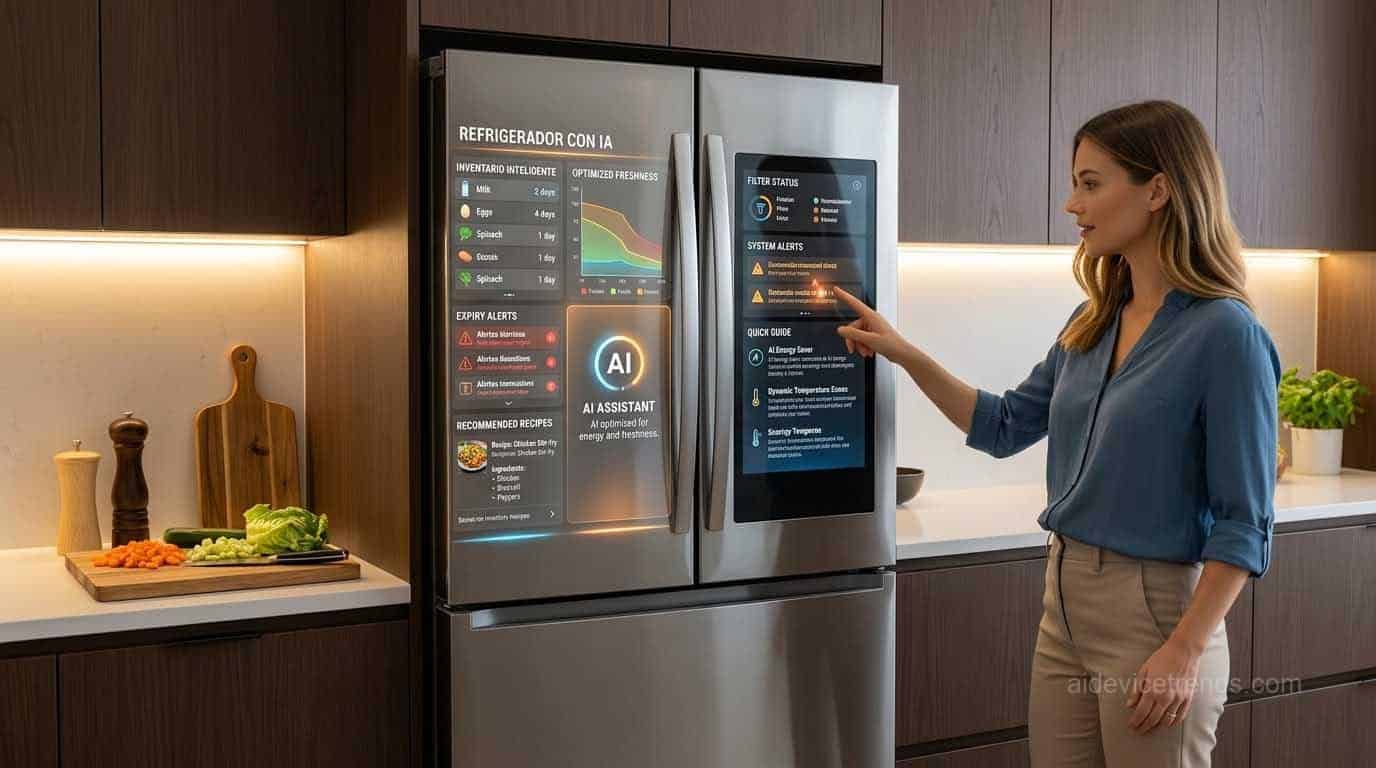
Let’s start with the good stuff. The 2026 smart kitchen is, in many ways, a gentle revolution. At CES 2026, Samsung unveiled its expanded AI ecosystem, including the Bespoke AI Refrigerator Family Hub, now integrated with Google Gemini. This fridge does more than just show your calendar. It can track what goes in and out, helping with meal planning and reducing food waste. It’s like having a patient, quiet friend who just says, “Hey, you’re almost out of eggs,” without the passive-aggressive note.
Bosch introduced “Bosch Cook AI,” an agentic AI that provides live, precise guidance through the cooking process. It adapts to the ingredients you have on hand and can orchestrate multiple appliances to help you cook complex meals. You tell it what you have; it tells you what to do. It’s like having a pro chef on speed dial.
Then there’s LG. At InnoFest 2026, LG showcased its SIGNATURE ecosystem, where appliances are designed to “understand” you. Their refrigerator uses a large language model for natural dialogue, while the oven can recognize over 85 dishes and automatically set the perfect cooking mode. It’s not just a tool. It’s a collaborator. A very expensive, very smart collaborator.
3. The foe: when the kitchen knows you too well
But here’s where the unease creeps in. A digital footprint is one thing. A digital kitchen footprint feels more… intimate.
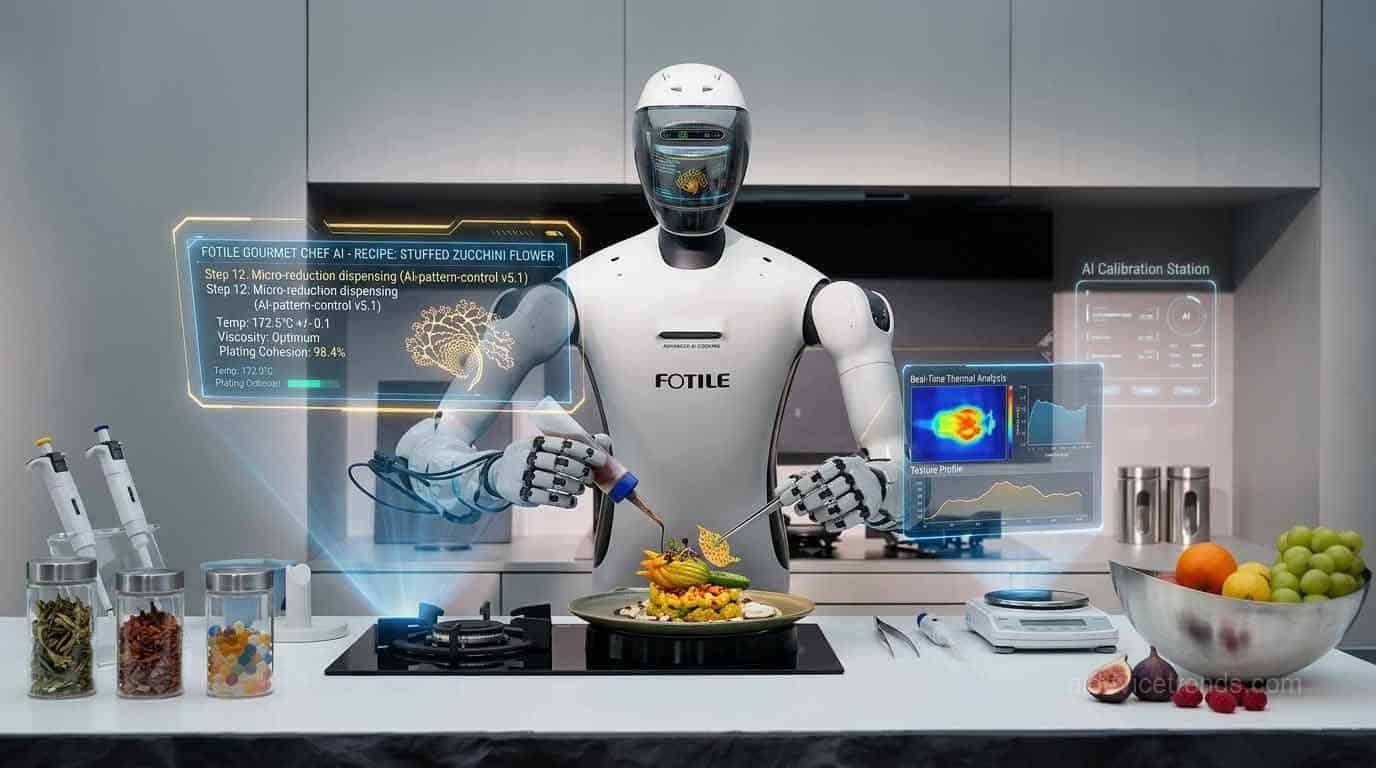
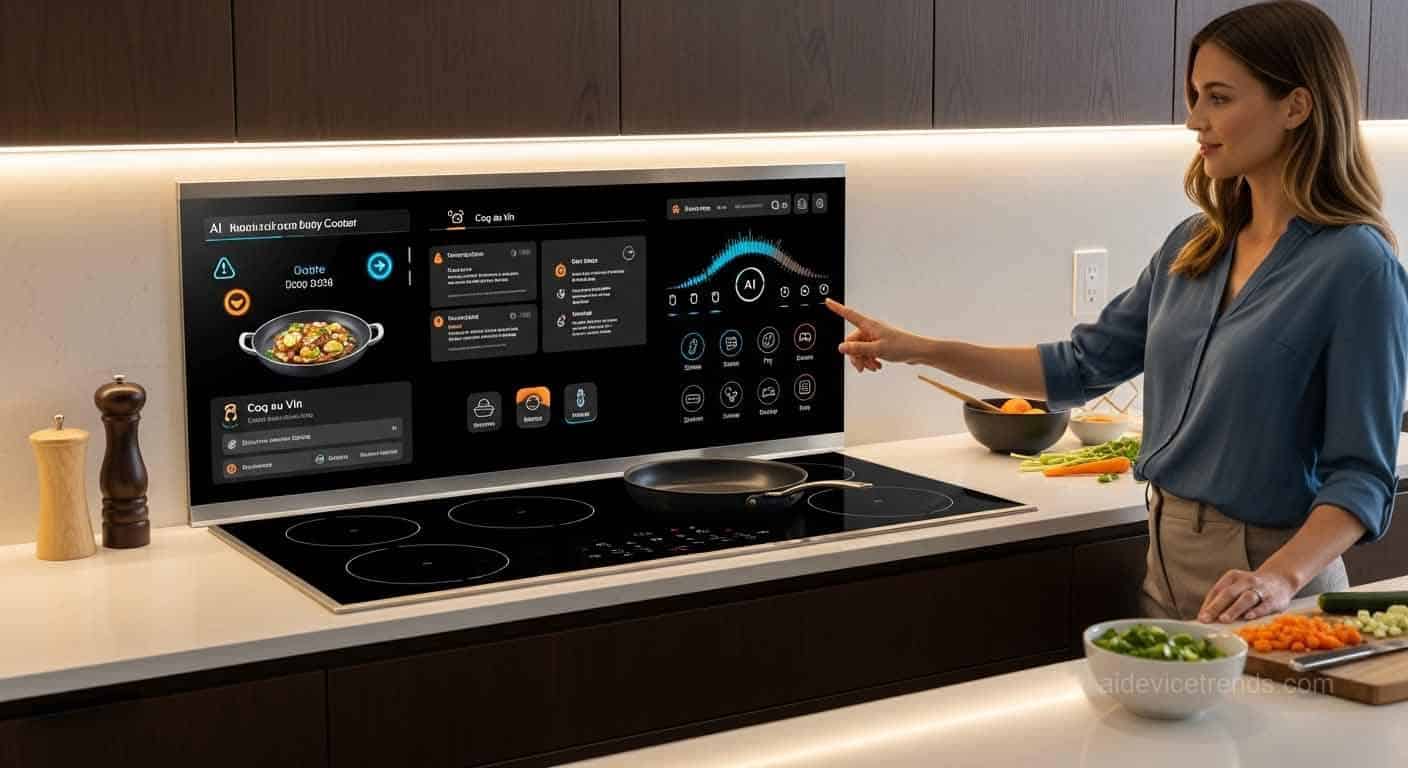
My new fridge, for all its helpfulness, now knows my eating habits. It knows I have a weakness for midnight cheese. It knows how often I buy vegetables versus how often I actually eat them (let’s not talk about it). In China at AWE 2026, brands are pushing even further. FOTILE unveiled a robotic kitchen with robot arms that can autonomously cut vegetables and cook dishes, while Robam introduced AI cooking glasses that tell you when to add salt. Robam also has a “Culinary Master AI Mega Model” that, when you tell it what’s in your fridge, will recommend recipes and even adjust your stove automatically.
There is a specific kind of loneliness that comes from learning to cook a perfect meal, only to have it plated by a set of robotic arms. You share it with no one but the algorithm that guided your hand.
It’s amazing. It’s also slightly unnerving. Am I cooking, or am I just following the instructions of an invisible line cook bossing me around through a screen? My grandmother used to say the secret ingredient was love. What’s the secret ingredient when the cookbook is an AI?
4. The middle ground: a conversation, not a commandeering
And yet, the friendlier side of this technology is that it’s learning to be a guide, not a general. Reports from China show that the most commercially promising uses of AI are often the most routine. Since cooking and cleaning are daily tasks, even small improvements in convenience are easy to notice, and easier to sell. This is where the magic truly lies.
The AI washing machine that can identify fabric types and choose the right program is a friend. The robot vacuum that can “see” a sock and pick it up before it gets stuck is a friend. The smart oven that preheats itself because it knows you always cook dinner at 7 PM is a friend. These are things that fade into the background. They don’t demand attention. They just make life a little smoother. Perhaps the dream of AI isn’t a robot that does all the work, but one that handles the repetitive parts, leaving us the joy of the creative parts. A study from the 2026中国家电及消费电子博览会 suggested that consumers aren’t just after AI for its own sake; they want it to solve the daily headache of “what to cook” and “how to make it less of a chore”. That’s a friend. A helpful one.
But the moment the technology demands we perform a complex dance for it, or attempts to monetize our late-night snack habits, it starts to feel like a foe. The line is thin, personal, and probably different for everyone.
5. The verdict: ‘frenemy’
So, after a month, where do I land? My smart kitchen appliances are a little bit of both. They are a frenemy. An ally in the war against wasted food and a quiet judge of my dietary choices.
In China, the penetration rate of AI home appliances exceeded 50 percent in 2025. Half of us are already living with these digital roommates. We’re not going back. The market for home cooking robots alone is projected to grow from $552 million in 2025 to $628.69 million in 2026. The technology is here to stay, and it’s going to get more integrated, not less.
The question, then, isn’t really “friend or foe?” It’s about boundaries. Do we use the technology, or does it start to use us? The best appliance in my smart kitchen isn’t the one with the most features. It’s the one that helps me the most while asking for the least in return. It’s the one that stays a quiet, helpful friend, and never crosses the line into becoming a bossy, overbearing foe.
Conclusion: The kitchen table, still ours
The smart kitchen of 2026 is a marvel. It saves time, reduces waste, and can honestly make you a better cook. But the most important ingredient, the one no algorithm can replicate, is still you. The laughter, the conversation, the burnt edges that become a funny story — that is still, and always will be, ours.
What about you? Are you ready to let an AI into your kitchen? Or is your spatula staying strictly analog? I’d love to hear your thoughts in the comments.
“I spent a month with an AI fridge that tracked my groceries, a smart oven that cooked dinner, and a robot that cleaned up. I didn’t expect to both love and fear my own kitchen”.
Introduction: The gadget that knows you ate the last egg
I didn’t plan to fall into this rabbit hole. It started with a fridge. Not just any fridge, but one with a camera inside. I know, I know. I thought it was silly too. Until an afternoon when I was at the supermarket, utterly blanking on whether we had milk. I opened the app on my phone, scrolled to the live feed of my fridge shelves, and there it was: the milk, right on the middle shelf, mocking me silently.
I bought the milk, came home, and for the first time in a long time, I didn’t waste a drop. That small, stupid victory was the moment I crossed the line from skeptic to convert. The era of the smart kitchen is upon us. But as with any hurried, tech-driven marriage, I couldn’t help but wonder: is this new partner in my kitchen a friend worth having, or a foe I’m letting in through the back door?
1. The numbers say we’re already inside
I’m not alone in this. The global market for smart kitchen appliances is projected to grow from USD 23.68 billion in 2025 to USD 26.25 billion in 2026, and is expected to reach USD 43.93 billion by 2031, with a compound annual growth rate (CAGR) of 10.86% during the forecast period. This steady expansion is driven by our collective hunger for connected homes, energy efficiency, and, of course, the quiet integration of artificial intelligence into our daily routines.
The kitchen, once the heart of inefficient analog heat, is now the fastest-growing node in the digital home. And like any rapid expansion, it brings both comfort and growing pains.
2. The friend: The quiet assistant who actually helps
Let’s start with the good stuff. The 2026 smart kitchen is, in many ways, a gentle revolution. At CES 2026, Samsung unveiled its expanded AI ecosystem, including the Bespoke AI Refrigerator Family Hub, now integrated with Google Gemini. This fridge does more than just show your calendar. It can track what goes in and out, helping with meal planning and reducing food waste. It’s like having a patient, quiet friend who just says, “Hey, you’re almost out of eggs,” without the passive-aggressive note.
Bosch introduced “Bosch Cook AI,” an agentic AI that provides live, precise guidance through the cooking process. It adapts to the ingredients you have on hand and can orchestrate multiple appliances to help you cook complex meals. You tell it what you have; it tells you what to do. It’s like having a pro chef on speed dial.
Then there’s LG. At InnoFest 2026, LG showcased its SIGNATURE ecosystem, where appliances are designed to “understand” you. Their refrigerator uses a large language model for natural dialogue, while the oven can recognize over 85 dishes and automatically set the perfect cooking mode. It’s not just a tool. It’s a collaborator. A very expensive, very smart collaborator.
3. The foe: when the kitchen knows you too well
But here’s where the unease creeps in. A digital footprint is one thing. A digital kitchen footprint feels more… intimate.
My new fridge, for all its helpfulness, now knows my eating habits. It knows I have a weakness for midnight cheese. It knows how often I buy vegetables versus how often I actually eat them (let’s not talk about it). In China at AWE 2026, brands are pushing even further. FOTILE unveiled a robotic kitchen with robot arms that can autonomously cut vegetables and cook dishes, while Robam introduced AI cooking glasses that tell you when to add salt. Robam also has a “Culinary Master AI Mega Model” that, when you tell it what’s in your fridge, will recommend recipes and even adjust your stove automatically.
There is a specific kind of loneliness that comes from learning to cook a perfect meal, only to have it plated by a set of robotic arms. You share it with no one but the algorithm that guided your hand.
It’s amazing. It’s also slightly unnerving. Am I cooking, or am I just following the instructions of an invisible line cook bossing me around through a screen? My grandmother used to say the secret ingredient was love. What’s the secret ingredient when the cookbook is an AI?
4. The middle ground: a conversation, not a commandeering
And yet, the friendlier side of this technology is that it’s learning to be a guide, not a general. Reports from China show that the most commercially promising uses of AI are often the most routine. Since cooking and cleaning are daily tasks, even small improvements in convenience are easy to notice, and easier to sell. This is where the magic truly lies.
The AI washing machine that can identify fabric types and choose the right program is a friend. The robot vacuum that can “see” a sock and pick it up before it gets stuck is a friend. The smart oven that preheats itself because it knows you always cook dinner at 7 PM is a friend. These are things that fade into the background. They don’t demand attention. They just make life a little smoother. Perhaps the dream of AI isn’t a robot that does all the work, but one that handles the repetitive parts, leaving us the joy of the creative parts. A study from the 2026中国家电及消费电子博览会 suggested that consumers aren’t just after AI for its own sake; they want it to solve the daily headache of “what to cook” and “how to make it less of a chore”. That’s a friend. A helpful one.
But the moment the technology demands we perform a complex dance for it, or attempts to monetize our late-night snack habits, it starts to feel like a foe. The line is thin, personal, and probably different for everyone.
5. The verdict: ‘frenemy’
So, after a month, where do I land? My smart kitchen appliances are a little bit of both. They are a frenemy. An ally in the war against wasted food and a quiet judge of my dietary choices.
In China, the penetration rate of AI home appliances exceeded 50 percent in 2025. Half of us are already living with these digital roommates. We’re not going back. The market for home cooking robots alone is projected to grow from $552 million in 2025 to $628.69 million in 2026. The technology is here to stay, and it’s going to get more integrated, not less.
The question, then, isn’t really “friend or foe?” It’s about boundaries. Do we use the technology, or does it start to use us? The best appliance in my smart kitchen isn’t the one with the most features. It’s the one that helps me the most while asking for the least in return. It’s the one that stays a quiet, helpful friend, and never crosses the line into becoming a bossy, overbearing foe.
Conclusion: The kitchen table, still ours
The smart kitchen of 2026 is a marvel. It saves time, reduces waste, and can honestly make you a better cook. But the most important ingredient, the one no algorithm can replicate, is still you. The laughter, the conversation, the burnt edges that become a funny story — that is still, and always will be, ours.
What about you? Are you ready to let an AI into your kitchen? Or is your spatula staying strictly analog? I’d love to hear your thoughts in the comments.
ME + AI = UNLIMITED PROJECTS
weekly popular
you might also like

From layoff to $300k ARR in 12 weeks: The dawn of the AI solopreneur
"Nine months ago, he was laid off. The reason? AI. Today, he runs a company projected to hit $5 million in revenue this year — with just two partners and an army of 12 [...]

FBI probes 12 missing scientists; A 2026 mystery that could redefine reality – Part 2: The time travel theory
"They have been watching us for generations. Their ships are silent. Their bodies are strange. But if Greys are truly time travelers from a dying future, their mission is not conquest — it is [...]

FBI probes 12 missing scientists; a 2026 mystery that could redefine reality – Part 1: The investigation
"The FBI is investigating. Congress is demanding answers. Twenty scientists connected to America's and China's most sensitive nuclear, hypersonic, AI, and space programs have died or vanished. The only theory that fits the facts [...]
The ‘ChatGPT moment’ for robots is here: Why 2026 is the year physical AI gets real
"The AI that could write your emails was only the first act. Now comes the sequel: machines that read pressure gauges, and load factory trucks. Robots are finally learning what the world feels like". [...]