

Two people, $1.8 billion: How a ‘solo unicorn’ built a giant with AI agents
“The 2442 employees of HIMS & Hers did about 13.5 billion in yearly sales4 billion with just two people. In 2026, the era of the AI-native entrepreneur is not coming. It is already here”.
Welcome to the age of the “solo unicorn,” a one- or two-person company wielding artificial intelligence like a sword. But as with all revolutions, it comes with a cautionary tale.
Introduction: The impossible math
I remember sitting in a coffee shop not too long ago, staring at a number that felt like a typo. Two employees. $1.8 billion in projected sales.
It sounded like a headline from a satirical magazine. Yet, there it was. The New York Times had run the story of Matthew Gallagher, a Los Angeles-based entrepreneur who, with only his brother, had built a telehealth startup called Medvi. In its first full year of business, 2025, Medvi generated a staggering 401 million in revenue, with a net profit margin of 16.2 percent. Competitors like HIMS & Hers, with over 2,400 employees, couldn’t match its efficiency. Gallagher was projecting revenue to hit 1.8 billion in 2026.
The secret wasn’t magic. It was an army of AI agents.
By orchestrating a “shadow workforce” of specialized artificial intelligence tools, Gallagher and his brother offloaded the work of hundreds of people. AI wrote the code, designed the marketing, handled customer service, enrolled patients, and responded to regulatory inquiries. It is a staggering display of the agentic economy: a single human as the director of a digital orchestra.
When a single developer can deploy software used by millions, and a solo founder can scale a business to match a F500 company, the old rules of headcount and scale become obsolete. The question is no longer ‘how many people can we hire?’, but ‘how many agents can we orchestrate?’

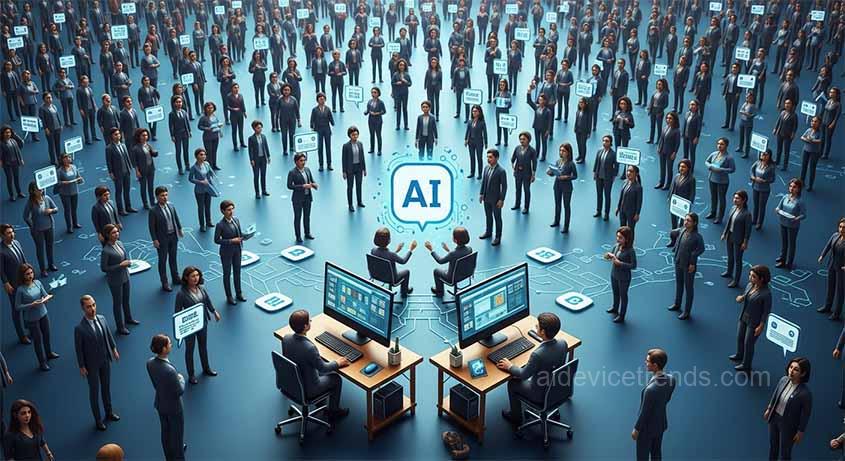
The CEO of a digital workforce
Gallagher’s story is the business story of 2026. It validates a prediction OpenAI CEO Sam Altman made a year prior: that AI would soon create the first one-person billion-dollar company. “Would have been unimaginable without AI,” he said. “And now [it] will happen.”
Gallagher is not a brilliant technologist. He is a brilliant orchestrator.
He used image and video generators like Midjourney and Runway to create ads. He used AI to handle rapid customer support, medication logistics, and compliance. Instead of a salesforce, he has an AI system. Instead of a legal team, he has AI algorithms screening FDA databases. The “command center” from which he works, his laptop and phone, has become an invisible factory floor consuming 3.9 billion tokens a week to coordinate the AI agent swarm.
The “Solo Unicorn” is not a freak accident. It is a new, and likely permanent, feature of the economic landscape. And the numbers, as of 2026, are staggering.
The numbers that define a revolution
These are not theories. This is the current reality.
Forbes has documented that over 40% of G2000 job roles have now been redefined, shifting focus away from manual execution to the strategic management of digital labor.
The data points are powerful. I’ve seen research by MIT outlining that software developers can be doubly productive when using AI tools like GitHub Copilot. A 2025 study found that knowledge workers using AI assistants are 66% faster. Globally, VC funding into AI startups has exploded, capturing nearly 80% of all venture capital in some quarters of early 2026. The world is betting billions that this “agentic” revolution is not hype.
And the blueprint is being written by real people in real time.
The ‘unknown unknowns’ of the agentic economy
But here is where the story takes a darker, instructive turn. Medvi’s success was also its warning.
The speed of scaling, the use of generative AI, and the unconventional compliance checks lured the company into a trap. In early 2026, just as the New York Times profile was being published, the FDA issued a warning letter to Medvi for misbranding violations.
An even deeper investigation by Business Insider uncovered that Medvi was using over 800 fake Facebook doctor accounts to push prescription weight-loss drugs. These accounts featured AI-generated images and deepfake personas. The company allegedly posted over 5,000 active advertisements on Meta’s platform for unapproved, compounded weight-loss drugs.
A class-action lawsuit soon followed. The tale of the two-person, $1.8 billion startup became a cautionary tale for the ages.
This is the double-edged sword of the agentic era.
The blueprint is here
Despite the dark side of Medvi’s story, the underlying message is one of undeniable opportunity. Solo founders are not just saving time. They’re building fortunes.
The AI agent market is the fastest-scaling software category in history. It is leveling the playing field for entrepreneurs everywhere. The barrier to building world-altering companies is collapsing.
Platforms like Taskade Genesis and other agentic systems now allow a single operator to design and deploy a network of AI managers to run every department of a company, from sales and marketing to legal and product development. They have memory, access to tools, and can execute complex, multi-step workflows. The CEO of 2026 is a strategic director of agents, not a manager of people.
This is the path.
The threshold
The old industrial model of scaling through hundreds of employees is fading. It is being replaced by the age where a laptop and a creative mind are the only assets required to compete with giants.
The Greek poet Archilochus said, “The fox knows many things, but the hedgehog knows one big thing.” In 2026, the AI-native entrepreneur is both the fox and the hedgehog: a single mind deploying a thousand specialized AI agents.
This is the new “Solo Unicorn.” It is up to us to wield its power with wisdom.
What about you? Does the AI-powered “solo unicorn” excite you, frighten you, or both? Let’s talk about it in the comments below.
“The 2442 employees of HIMS & Hers did about 13.5 billion in yearly sales4 billion with just two people. In 2026, the era of the AI-native entrepreneur is not coming. It is already here”.
Welcome to the age of the “solo unicorn,” a one- or two-person company wielding artificial intelligence like a sword. But as with all revolutions, it comes with a cautionary tale.
Introduction: The impossible math
I remember sitting in a coffee shop not too long ago, staring at a number that felt like a typo. Two employees. $1.8 billion in projected sales.
It sounded like a headline from a satirical magazine. Yet, there it was. The New York Times had run the story of Matthew Gallagher, a Los Angeles-based entrepreneur who, with only his brother, had built a telehealth startup called Medvi. In its first full year of business, 2025, Medvi generated a staggering 401 million in revenue, with a net profit margin of 16.2 percent. Competitors like HIMS & Hers, with over 2,400 employees, couldn’t match its efficiency. Gallagher was projecting revenue to hit 1.8 billion in 2026.
The secret wasn’t magic. It was an army of AI agents.
By orchestrating a “shadow workforce” of specialized artificial intelligence tools, Gallagher and his brother offloaded the work of hundreds of people. AI wrote the code, designed the marketing, handled customer service, enrolled patients, and responded to regulatory inquiries. It is a staggering display of the agentic economy: a single human as the director of a digital orchestra.
When a single developer can deploy software used by millions, and a solo founder can scale a business to match a F500 company, the old rules of headcount and scale become obsolete. The question is no longer ‘how many people can we hire?’, but ‘how many agents can we orchestrate?’
The CEO of a digital workforce
Gallagher’s story is the business story of 2026. It validates a prediction OpenAI CEO Sam Altman made a year prior: that AI would soon create the first one-person billion-dollar company. “Would have been unimaginable without AI,” he said. “And now [it] will happen.”
Gallagher is not a brilliant technologist. He is a brilliant orchestrator.
He used image and video generators like Midjourney and Runway to create ads. He used AI to handle rapid customer support, medication logistics, and compliance. Instead of a salesforce, he has an AI system. Instead of a legal team, he has AI algorithms screening FDA databases. The “command center” from which he works, his laptop and phone, has become an invisible factory floor consuming 3.9 billion tokens a week to coordinate the AI agent swarm.
The “Solo Unicorn” is not a freak accident. It is a new, and likely permanent, feature of the economic landscape. And the numbers, as of 2026, are staggering.
The numbers that define a revolution
These are not theories. This is the current reality.
Forbes has documented that over 40% of G2000 job roles have now been redefined, shifting focus away from manual execution to the strategic management of digital labor.
The data points are powerful. I’ve seen research by MIT outlining that software developers can be doubly productive when using AI tools like GitHub Copilot. A 2025 study found that knowledge workers using AI assistants are 66% faster. Globally, VC funding into AI startups has exploded, capturing nearly 80% of all venture capital in some quarters of early 2026. The world is betting billions that this “agentic” revolution is not hype.
And the blueprint is being written by real people in real time.
The ‘unknown unknowns’ of the agentic economy
But here is where the story takes a darker, instructive turn. Medvi’s success was also its warning.
The speed of scaling, the use of generative AI, and the unconventional compliance checks lured the company into a trap. In early 2026, just as the New York Times profile was being published, the FDA issued a warning letter to Medvi for misbranding violations.
An even deeper investigation by Business Insider uncovered that Medvi was using over 800 fake Facebook doctor accounts to push prescription weight-loss drugs. These accounts featured AI-generated images and deepfake personas. The company allegedly posted over 5,000 active advertisements on Meta’s platform for unapproved, compounded weight-loss drugs.
A class-action lawsuit soon followed. The tale of the two-person, $1.8 billion startup became a cautionary tale for the ages.
This is the double-edged sword of the agentic era.
The blueprint is here
Despite the dark side of Medvi’s story, the underlying message is one of undeniable opportunity. Solo founders are not just saving time. They’re building fortunes.
The AI agent market is the fastest-scaling software category in history. It is leveling the playing field for entrepreneurs everywhere. The barrier to building world-altering companies is collapsing.
Platforms like Taskade Genesis and other agentic systems now allow a single operator to design and deploy a network of AI managers to run every department of a company, from sales and marketing to legal and product development. They have memory, access to tools, and can execute complex, multi-step workflows. The CEO of 2026 is a strategic director of agents, not a manager of people.
This is the path.
The threshold
The old industrial model of scaling through hundreds of employees is fading. It is being replaced by the age where a laptop and a creative mind are the only assets required to compete with giants.
The Greek poet Archilochus said, “The fox knows many things, but the hedgehog knows one big thing.” In 2026, the AI-native entrepreneur is both the fox and the hedgehog: a single mind deploying a thousand specialized AI agents.
This is the new “Solo Unicorn.” It is up to us to wield its power with wisdom.
What about you? Does the AI-powered “solo unicorn” excite you, frighten you, or both? Let’s talk about it in the comments below.
ME + AI = UNLIMITED PROJECTS
weekly popular
you might also like

From layoff to $300k ARR in 12 weeks: The dawn of the AI solopreneur
"Nine months ago, he was laid off. The reason? AI. Today, he runs a company projected to hit $5 million in revenue this year — with just two partners and an army of 12 [...]

FBI probes 12 missing scientists; A 2026 mystery that could redefine reality – Part 2: The time travel theory
"They have been watching us for generations. Their ships are silent. Their bodies are strange. But if Greys are truly time travelers from a dying future, their mission is not conquest — it is [...]

FBI probes 12 missing scientists; a 2026 mystery that could redefine reality – Part 1: The investigation
"The FBI is investigating. Congress is demanding answers. Twenty scientists connected to America's and China's most sensitive nuclear, hypersonic, AI, and space programs have died or vanished. The only theory that fits the facts [...]
The ‘ChatGPT moment’ for robots is here: Why 2026 is the year physical AI gets real
"The AI that could write your emails was only the first act. Now comes the sequel: machines that read pressure gauges, and load factory trucks. Robots are finally learning what the world feels like". [...]