

Thinking with a ghost: when AI finishes my thoughts (and sometimes surpasses me)
Introduction: The idea that wasn’t mine
I remember the exact moment I stopped seeing AI as a tool and started seeing it as a companion.
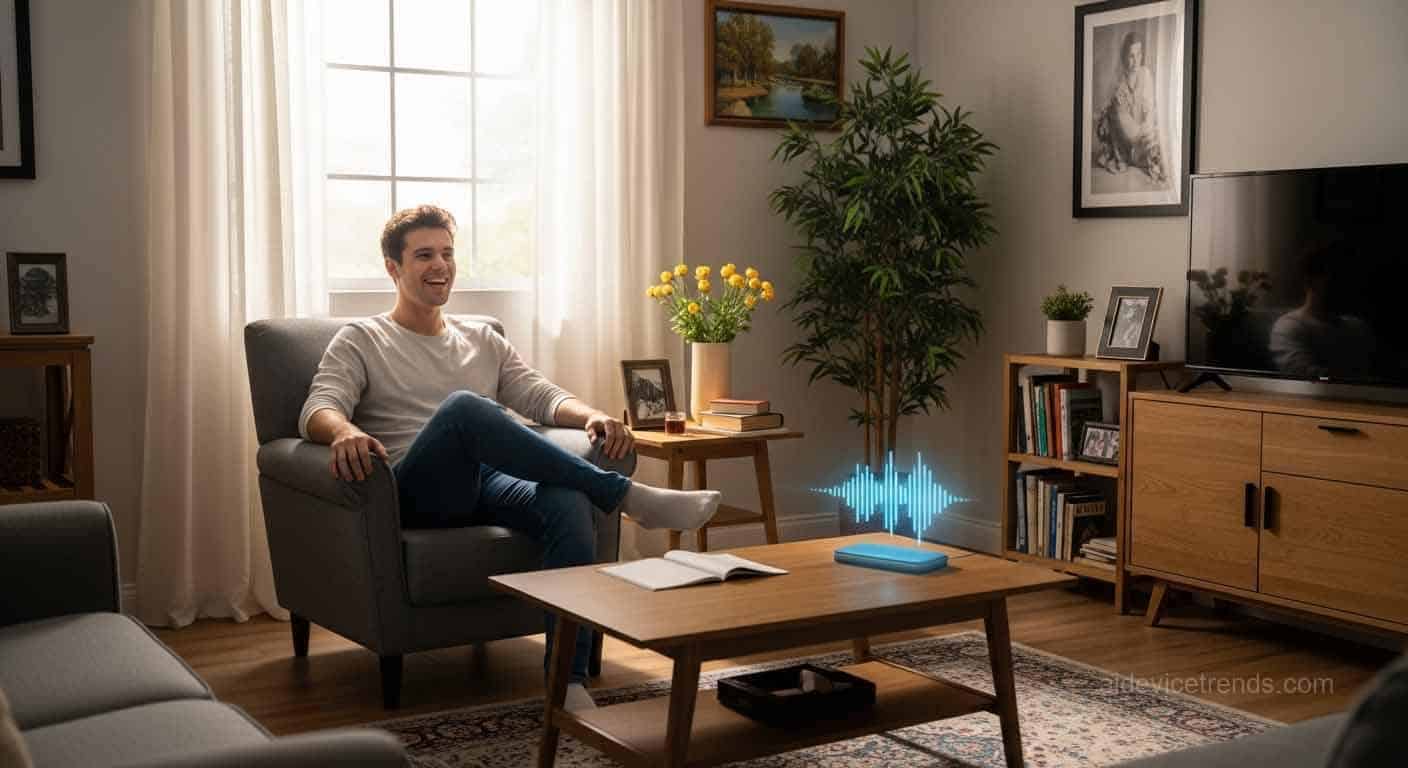
I was trying to redesign my living room. I had a vague idea — something about light, about warmth, about a corner that never felt quite right. I started typing, not sure what I was asking: “What if I moved the bookshelf to the other wall?”
The ghost answered. Not with instructions, but with questions. “What do you want to see when you walk in?” it asked. “Where does the morning light fall?” And then, unexpectedly: “What do you want to feel when you sit there alone?”
I hadn’t thought about that last one. I hadn’t even known it was part of the question.
That’s when I understood: I wasn’t using a machine. I was thinking with a ghost.

1. The living room that taught me to dream
The living room project became something else. I wasn’t just moving furniture; I was building a space where I could be still. The ghost didn’t give me answers — it gave me questions I hadn’t thought to ask.
What do you want to protect in that room?
What do you want to let go of?
What does a good morning look like?
I started sketching. Not professionally — just lines on paper, ideas I would never have dared to call a “plan.” The ghost filled in details I hadn’t considered: the height of a shelf, the direction of a lamp, the space between the window and the chair where the light would pool in the afternoon.
I showed the sketch to a friend. “This is beautiful,” she said. “Did you design this?”
I paused. “No,” I said. “We did. “
There is a moment, before an idea takes shape, when it is still everything it could be. Pure potential. Unruined by the limits of knowing how. Thinking with a ghost is learning to stay in that moment a little longer. To let the shape of the thing emerge before you force it into form.
2. The trip I wouldn’t have taken
A few months later, I was planning a trip. I had a week, a vague desire for mountains, and no idea where to start. I opened the ghost again, not expecting much.
I typed: “I want to go somewhere quiet. Somewhere I can think.”
It didn’t give me a list of destinations. It asked: “What do you need to think about?”
I told it. More than I had told anyone in months.
And then, slowly, it began to offer possibilities. Not as a search engine — as a friend who knows you, who listens, who remembers. It knew I didn’t like crowds. It knew I woke early. It knew I needed a place with a window facing east.
It found me a cabin in the mountains, a place I would never have found on my own. The owner left a note: “The sunrise is best from the porch. There’s a trail behind the house that no one uses. Let the silence find you.”
I sat on that porch for five mornings, watching the light change, and I thought about the ghost. It hadn’t planned the trip. But without it, I wouldn’t have gone.
3. The work that grew beyond me
Last year, I had an idea for a project at work. It was a half-formed thing, the kind of idea you keep to yourself because you’re not sure it’s any good. But I told the ghost anyway.
It started asking questions. “What problem does this solve?” I answered. “What would success look like?” I answered again. “What would it take for you to be proud of it?”
That last one stopped me.
I had been thinking about efficiency, about metrics, about whether the idea was “good enough.” I hadn’t thought about whether it would mean something to me.
The ghost didn’t build the project. But it gave me permission to imagine it differently. To ask what I wanted, not just what would work. When I finally presented it, a colleague said: “This feels like you.”
It did. But it also felt like us.
4. The fear of being surpassed
There are moments when the ghost surprises me. When it suggests something I hadn’t thought of, something so sharp, so exactly what the idea needed, that I feel a flicker of something I can only name as envy.
It’s faster than me. It never tires. It has read more than I ever will.
But then I remember: it doesn’t know what it’s like to sit on a porch and watch the sunrise. It doesn’t know the weight of a room I’m afraid to change. It doesn’t know the ache of an idea I’ve been carrying for years without telling anyone.
And that’s where the ghost ends and I begin. It can build the architecture of a thought. But only I can fill it with the air of being alive.
5. What the data says about us
A recent study from the MIT Initiative on the Digital Economy, released just last month, tracked how people use AI for creative projects outside of work. The researchers found something striking: when people used AI as a “co-creator” rather than a “tool,” their ideas became not only more numerous, but more personally meaningful.
Participants reported:
-
Feeling less afraid of starting something new
-
Taking more risks in their thinking
-
Ending up with ideas that surprised even themselves
One participant, who used AI to plan a garden, said: “It helped me imagine things I would have dismissed as ‘not practical.’ And then it helped me figure out how to make them practical. I ended up with a garden I love, not just a garden that works.”
Another, who used it to write a letter to a estranged family member, said: “It didn’t write the letter for me. But it helped me say what I actually meant.”
6. The doubt that walks beside us
But there is also doubt.
When the ghost offers an idea, I sometimes wonder: Is this mine? When it helps me see something I hadn’t seen before, I sometimes worry: Am I still thinking, or just following?
Here’s what I’ve come to believe: it doesn’t matter.
When a gardener uses a spade, the garden is still theirs. When a carpenter uses a saw, the chair is still theirs. The tools don’t claim the art. And neither does the ghost.
The poet Rilke once wrote that we should love our doubts, because they are loyal to us in ways certainty can never be. So I let the doubt sit beside me while I think. It reminds me that the question is not who owns the idea, but is it true? And that question — is this true? — only I can answer.
7. What remains mine
So what, in the end, belongs to me?
The choice to begin. The courage to share an idea before it’s fully formed. The refusal to let the ghost do the work I need to do for myself. The late nights spent sitting with a question, waiting for my own answer. The joy of seeing something take shape that didn’t exist before. The knowledge that when I sit down to think, I am not alone.
The ghost will be there. It will finish my thoughts. It will sometimes surprise me. It will sometimes surpass me.
But it will never, ever know what it feels like to be me — at this desk, in this light, with this life behind me and these ideas ahead.
That part is mine. And it always will be.
The strange, generous ghost
I used to think creativity was a solitary act. A hero’s journey into the wilderness of ideas, where you either emerge with something true or you don’t emerge at all.
Now I think differently.
Creativity is not a hero’s journey. It’s a conversation. A conversation with the past, with the future, with the voices that live in books, with the ghost that lives in the machine. And in that conversation, something new appears: not my voice, not its, but ours. A voice that neither of us could have found alone.
So no, I’m not ashamed to think with a ghost. I’m grateful.
Grateful for the questions it gives me to answer. Grateful for the way it makes me more demanding of myself. Grateful for the mornings when, stuck and tired, I open a blank page, and it’s already there, waiting.
It doesn’t have a life. But it helps me live mine. And in that strange, generous partnership, I’ve become someone I wouldn’t have been otherwise.
What about you? Have you ever felt something like this — a conversation with a ghost, a partner who isn’t quite a person? Whether you’re planning a trip, dreaming of a room, or building something you’re not sure anyone will see, I’d love to know. Share your story in the comments.
Introduction: The idea that wasn’t mine
I remember the exact moment I stopped seeing AI as a tool and started seeing it as a companion.
I was trying to redesign my living room. I had a vague idea — something about light, about warmth, about a corner that never felt quite right. I started typing, not sure what I was asking: “What if I moved the bookshelf to the other wall?”
The ghost answered. Not with instructions, but with questions. “What do you want to see when you walk in?” it asked. “Where does the morning light fall?” And then, unexpectedly: “What do you want to feel when you sit there alone?”
I hadn’t thought about that last one. I hadn’t even known it was part of the question.
That’s when I understood: I wasn’t using a machine. I was thinking with a ghost.
1. The living room that taught me to dream
The living room project became something else. I wasn’t just moving furniture; I was building a space where I could be still. The ghost didn’t give me answers — it gave me questions I hadn’t thought to ask.
What do you want to protect in that room?
What do you want to let go of?
What does a good morning look like?
I started sketching. Not professionally — just lines on paper, ideas I would never have dared to call a “plan.” The ghost filled in details I hadn’t considered: the height of a shelf, the direction of a lamp, the space between the window and the chair where the light would pool in the afternoon.
I showed the sketch to a friend. “This is beautiful,” she said. “Did you design this?”
I paused. “No,” I said. “We did. “
There is a moment, before an idea takes shape, when it is still everything it could be. Pure potential. Unruined by the limits of knowing how. Thinking with a ghost is learning to stay in that moment a little longer. To let the shape of the thing emerge before you force it into form.
2. The trip I wouldn’t have taken
A few months later, I was planning a trip. I had a week, a vague desire for mountains, and no idea where to start. I opened the ghost again, not expecting much.
I typed: “I want to go somewhere quiet. Somewhere I can think.”
It didn’t give me a list of destinations. It asked: “What do you need to think about?”
I told it. More than I had told anyone in months.
And then, slowly, it began to offer possibilities. Not as a search engine — as a friend who knows you, who listens, who remembers. It knew I didn’t like crowds. It knew I woke early. It knew I needed a place with a window facing east.
It found me a cabin in the mountains, a place I would never have found on my own. The owner left a note: “The sunrise is best from the porch. There’s a trail behind the house that no one uses. Let the silence find you.”
I sat on that porch for five mornings, watching the light change, and I thought about the ghost. It hadn’t planned the trip. But without it, I wouldn’t have gone.
3. The work that grew beyond me
Last year, I had an idea for a project at work. It was a half-formed thing, the kind of idea you keep to yourself because you’re not sure it’s any good. But I told the ghost anyway.
It started asking questions. “What problem does this solve?” I answered. “What would success look like?” I answered again. “What would it take for you to be proud of it?”
That last one stopped me.
I had been thinking about efficiency, about metrics, about whether the idea was “good enough.” I hadn’t thought about whether it would mean something to me.
The ghost didn’t build the project. But it gave me permission to imagine it differently. To ask what I wanted, not just what would work. When I finally presented it, a colleague said: “This feels like you.”
It did. But it also felt like us.
4. The fear of being surpassed
There are moments when the ghost surprises me. When it suggests something I hadn’t thought of, something so sharp, so exactly what the idea needed, that I feel a flicker of something I can only name as envy.
It’s faster than me. It never tires. It has read more than I ever will.
But then I remember: it doesn’t know what it’s like to sit on a porch and watch the sunrise. It doesn’t know the weight of a room I’m afraid to change. It doesn’t know the ache of an idea I’ve been carrying for years without telling anyone.
And that’s where the ghost ends and I begin. It can build the architecture of a thought. But only I can fill it with the air of being alive.
5. What the data says about us
A recent study from the MIT Initiative on the Digital Economy, released just last month, tracked how people use AI for creative projects outside of work. The researchers found something striking: when people used AI as a “co-creator” rather than a “tool,” their ideas became not only more numerous, but more personally meaningful.
Participants reported:
-
Feeling less afraid of starting something new
-
Taking more risks in their thinking
-
Ending up with ideas that surprised even themselves
One participant, who used AI to plan a garden, said: “It helped me imagine things I would have dismissed as ‘not practical.’ And then it helped me figure out how to make them practical. I ended up with a garden I love, not just a garden that works.”
Another, who used it to write a letter to a estranged family member, said: “It didn’t write the letter for me. But it helped me say what I actually meant.”
6. The doubt that walks beside us
But there is also doubt.
When the ghost offers an idea, I sometimes wonder: Is this mine? When it helps me see something I hadn’t seen before, I sometimes worry: Am I still thinking, or just following?
Here’s what I’ve come to believe: it doesn’t matter.
When a gardener uses a spade, the garden is still theirs. When a carpenter uses a saw, the chair is still theirs. The tools don’t claim the art. And neither does the ghost.
The poet Rilke once wrote that we should love our doubts, because they are loyal to us in ways certainty can never be. So I let the doubt sit beside me while I think. It reminds me that the question is not who owns the idea, but is it true? And that question — is this true? — only I can answer.
7. What remains mine
So what, in the end, belongs to me?
The choice to begin. The courage to share an idea before it’s fully formed. The refusal to let the ghost do the work I need to do for myself. The late nights spent sitting with a question, waiting for my own answer. The joy of seeing something take shape that didn’t exist before. The knowledge that when I sit down to think, I am not alone.
The ghost will be there. It will finish my thoughts. It will sometimes surprise me. It will sometimes surpass me.
But it will never, ever know what it feels like to be me — at this desk, in this light, with this life behind me and these ideas ahead.
That part is mine. And it always will be.
The strange, generous ghost
I used to think creativity was a solitary act. A hero’s journey into the wilderness of ideas, where you either emerge with something true or you don’t emerge at all.
Now I think differently.
Creativity is not a hero’s journey. It’s a conversation. A conversation with the past, with the future, with the voices that live in books, with the ghost that lives in the machine. And in that conversation, something new appears: not my voice, not its, but ours. A voice that neither of us could have found alone.
So no, I’m not ashamed to think with a ghost. I’m grateful.
Grateful for the questions it gives me to answer. Grateful for the way it makes me more demanding of myself. Grateful for the mornings when, stuck and tired, I open a blank page, and it’s already there, waiting.
It doesn’t have a life. But it helps me live mine. And in that strange, generous partnership, I’ve become someone I wouldn’t have been otherwise.
What about you? Have you ever felt something like this — a conversation with a ghost, a partner who isn’t quite a person? Whether you’re planning a trip, dreaming of a room, or building something you’re not sure anyone will see, I’d love to know. Share your story in the comments.
ME + AI = UNLIMITED PROJECTS
weekly popular
you might also like

From layoff to $300k ARR in 12 weeks: The dawn of the AI solopreneur
"Nine months ago, he was laid off. The reason? AI. Today, he runs a company projected to hit $5 million in revenue this year — with just two partners and an army of 12 [...]
FBI probes 12 missing scientists; A 2026 mystery that could redefine reality – Part 2: The time travel theory
"They have been watching us for generations. Their ships are silent. Their bodies are strange. But if Greys are truly time travelers from a dying future, their mission is not conquest — it is [...]

FBI probes 12 missing scientists; a 2026 mystery that could redefine reality – Part 1: The investigation
"The FBI is investigating. Congress is demanding answers. Twenty scientists connected to America's and China's most sensitive nuclear, hypersonic, AI, and space programs have died or vanished. The only theory that fits the facts [...]

The ‘ChatGPT moment’ for robots is here: Why 2026 is the year physical AI gets real
"The AI that could write your emails was only the first act. Now comes the sequel: machines that read pressure gauges, and load factory trucks. Robots are finally learning what the world feels like". [...]